Official website of the State of California
Translate

SACRAMENTO —The Department of Health Care Services (DHCS) today announced a major advancement in statewide behavioral health transparency with the release of the Behavioral Health Public County Profile, California’s first public-facing, statewide tool to combine county-reported behavioral health data in a single, accessible resource. The profile enables the public, policymakers, and stakeholders to easily compare counties’ behavioral health planning, funding, service delivery, and progress toward statewide goals.
The profile reflects the culmination of two years of work under Proposition 1 and the Behavioral Health Services Act (BHSA), with DHCS working closely with counties to produce, validate, and standardize the information included in the profile. The release of the profile follows California’s transition on July 1, 2026, from the Mental Health Services Act to the new BHSA, which strengthens statewide accountability by aligning county investments with statewide goals for equity, outcomes, and transparency.
“By making data accessible and in one place, we are giving people the tools to see what’s working, where the gaps are, and how we can build a system that delivers care, dignity, and hope for everyone,” said Governor Gavin Newsom. “Knowledge is power, and we are far from powerless.”
“California set out to build one place where the public can clearly see how our behavioral health system is functioning at the local level, and this tool delivers on that vision,” said DHCS Director Michelle Baass. “The profile brings together complex data in a format that’s easy to understand, supporting more informed statewide and local conversations about how to advance behavioral health services.”
WHAT’S NEW: The profile increases transparency by integrating county demographics and behavioral health data, with exportable information from the counties’ three-year BHSA Integrated Plans, including program investments. After counties submitted their required integrated plans — three-year roadmaps for behavioral health services, programs, and investments — DHCS quickly processed and published county materials to provide a clear picture of county behavioral health priorities, projected expenditures across BHSA funding sources, and anticipated numbers served. The profile also includes:
Together, this information provides Californians with the clearest statewide picture to date of county behavioral health systems, performance, and planned investments.
WHY THIS MATTERS: The profile marks a major milestone in California’s effort to increase transparency and accountability under the BHSA. It makes county behavioral health data publicly accessible in a single dashboard, including demographics, homelessness and housing-related behavioral health services, Integrated Plan information, and performance measures, so Californians can see how local resources are allocated and how county performance compares statewide. Policymakers and stakeholders can use these data to strengthen oversight, monitor progress toward statewide goals, and inform future investments. This initiative is a core deliverable of California’s Mental Health for All modernization, advancing equitable access, accountability, and outcomes by making county behavioral health data transparent and actionable statewide.
LOOKING AHEAD: California will continue enhancing the profile in the coming year, adding more datasets, new reporting tools, and an expanded suite of performance measures. These enhancements will provide an increasingly comprehensive view of California’s behavioral health system and help the state and counties measure progress, identify opportunities for improvement, and strengthen services for Californians.
LEARN MORE: To explore county data and statewide progress, visit the Behavioral Health Public County Profile. For questions, please email BHTinfo@dhcs.ca.gov.
###
Office of Communications
(916) 440-7660
DHCSPress@dhcs.ca.gov
| What you need to know: Governor Newsom today launched CA Bridge Connect, a free statewide call- and text-based service offering immediate help and support to Californians seeking treatment for opioid use. This is part of California’s “no wrong door” approach to care, as we build a system that gives everyone access to the services and resources they need to get back on their feet and live a healthy life. To get help, call (800) 944-1807 or text (833) 308-0461. |
|---|
| SACRAMENTO — Governor Gavin Newsom today launched CA Bridge Connect, a free statewide call- and text-based service offering immediate help and support to Californians seeking treatment for opioid use. This is part of a broader strategy to take on the opioid and overdose epidemic, which includes expanding access to addiction treatment. “CA Bridge Connect makes it easier for Californians to find the right help, at the right time, so more people can begin treatment and take their next step toward recovery.” ~Governor Gavin Newsom The confidential helpline serves people seeking help, families, caregivers, and clinicians, regardless of insurance coverage. People reaching out can get same-day referrals to Behavioral Health Navigators who can assess a person’s needs; coordinate real-time referrals to clinics, emergency departments, community providers, and telehealth providers; and, when appropriate, prescribe Medication for Addiction Treatment (MAT), an evidence-based approach to treating opioid use disorder. “CA Bridge Connect further enforces our commitment to ensuring Californians have access to timely substance use treatment when and where they need it,” said Department of Health Care Services (DHCS) Director Michelle Baass. “We are building a system that prioritizes care, dignity, and recovery.” When someone is ready to seek treatment for opioid use disorder, help should be easy to find and easy to access. CA Bridge Connect gives Californians a direct, same-day route to lifesaving care. This access to evidence-based treatment, including MAT, is vital to preventing overdoses and improving health outcomes. “CA Bridge Connect partners with addiction treatment providers across the State who have truly embraced compassionate, evidence-based addiction care,” said Arianna Campbell, DMSc, MPH, PA-C, co-founder of CA Bridge. “Accessing treatment can be difficult in fragmented health systems. Through strong clinical partnerships and dedicated Behavioral Health Navigators, we are committed to making it easier for anyone to access care quickly. No one should face addiction alone.” No wrong door to care California takes a “no wrong door” approach to care, building a system that gives everyone access to the services and resources they need to get back on their feet and live a healthy life. CA Bridge Connect offers Californians another entry point to care, building on a longstanding partnership with the Public Health Institute’s CA Bridge program, the country’s largest emergency department-based opioid addiction treatment model. CA Bridge launched in 2018 to expand low-barrier access to MAT, supporting hospitals, street medicine teams, and community-based providers in helping Californians access evidence-based care immediately. California’s approach to care proves that people struggling with addiction want help — it just has to be accessible. Forty percent of patients offered treatment in the emergency department accepted, and when they saw a substance use navigator, that number rose to 85%. Even patients coming to the emergency department for issues unrelated to their substance use accepted treatment when it was offered more than half of the time. Both CA Bridge and CA Bridge Connect are simplified entry points to care, supporting statewide efforts to reduce barriers, expand treatment access, and strengthen connections across California’s behavioral health system. DHCS partnered with California-based 988 crisis call centers and the Addiction Treatment Locator, Analysis and Standards (ATLAS) treatment locator to add CA Bridge Connect as a resource within those systems. Addressing the opioid and overdose epidemic The overdose epidemic claims thousands of lives each year throughout the nation — and California is combating this through an all-hands-on-deck approach. A critical component of that is overdose prevention services and methods like naloxone, which is capable of reversing opioid overdoses swiftly and effectively. The state is offering CalRx-branded over-the-counter naloxone at a significantly lower price, while eligible California entities can receive free naloxone kits from the Naloxone Distribution Project, whose kits have reversed over 460,000 overdoses. Among other actions and legislation focused on addressing and treating the opioid crisis, in 2022, the Governor signed SB 184, which requires treatment facilities to either offer MAT directly to clients or have an effective referral process in place with narcotic treatment programs, community health centers, or other MAT providers. In 2024, he signed AB 2376 (Bains) to increase the number of hospital beds available for the treatment of substance use disorder, including MAT, by giving facilities new flexibility in managing their treatment slots. There are a number of projects focused on expanding MAT access, including the Tribal MAT Project, MAT Access Points, the California Hub & Spoke System, and more. The state is also taking aggressive action to target fentanyl trafficking and disrupt the supply of deadly illicit drugs in the state, including partnering with local law enforcement and expanding the California National Guard’s role in drug interdiction across the state and at the border. If you or someone you know needs help: call 1-800-944-1807 or text 1-833-308-0461, Monday through Friday, 9 AM to 5 PM. For more information on opioids and how you can protect yourself and loved ones, visit Opioids.CA.GOV, a one-stop shop for Californians seeking resources on prevention and treatment. |
###
FOR IMMEDIATE RELEASE
Tuesday, August 25, 2026
Governor’s Press Office: (916) 445-4571
Temporary Funding Withholds Reinforce Accountability for County Behavioral Health Plans that Failed to Meet State and Federal Provider Network and Timely Access Standards
SACRAMENTO —The Department of Health Care Services (DHCS) today announced new enforcement actions holding county Behavioral Health Plans (BHP) accountable to improve behavioral health access for Medi-Cal members. DHCS is implementing temporary funding withholds for 10 county BHPs that have not corrected repeated deficiencies in meeting state and federal standards for having enough providers to meet the needs of Medi-Cal members and/or ensuring timely access to behavioral health care.
“When someone needs help, waiting carries real consequences. Every day without care is a day of fear, confusion, and suffering that could have been eased. Care should meet people where they are: on time, close to home, and without hoops to jump through,” said DHCS Director Michelle Baass. “People deserve a path that is simple, steady, and kind, because mental health care isn’t paperwork, it’s help in the moment it matters.”
WHY THIS IS IMPORTANT: County BHPs are required to meet network adequacy (having enough qualified providers in a BHP to meet the needs of Medi-Cal members) and provide timely access to care. Each year, DHCS measures BHPs’ network adequacy, including provider-to-member ratios, appointment wait times, and geographic access. For years, DHCS has provided technical assistance and imposed corrective action plans to help BHPs address gaps and deficiencies with meeting established standards. Temporary funding withholds represent the next step to hold plans accountable. As California transforms its behavioral health delivery system, timely access to care remains essential.
“For several years, California has emphasized that timely, high-quality care is not optional—it’s fundamental to Medi-Cal’s mission. While several counties have made meaningful progress, others continue to have targeted gaps that need to close,” said State Medicaid Director Tyler Sadwith. “These temporary withholds underscore our commitment to accountability and ensure that every county moves decisively toward building the provider networks Californians need. By enforcing clear expectations and supporting counties to meet them, we are advancing a system where every member can rely on timely, equitable behavioral health care.
WHAT THIS MEANS: DHCS will temporarily withhold a portion of behavioral health funding from BHPs that remain out of compliance with one or more network adequacy standards for two consecutive certification cycles (2024-25 and 2025-26). Funds will be returned once a BHP demonstrates compliance. BHPs with deficiencies will also move into enhanced monitoring, including regular progress reporting and ongoing technical support. The imposition of temporary withholds represents the beginning point of a graduated enforcement framework that allows for further escalation as warranted, including ongoing temporary withholds and permanent monetary sanctions.
HOW THIS IMPROVES CARE: Holding counties accountable for meeting access standards helps ensure Medi-Cal members receive timely, medically necessary behavioral health services. Strong provider networks reduce wait times, improve access to care close to home, and support California’s broader behavioral health transformation through the California Advancing and Innovating Medi-Cal (CalAIM) initiative and Mental Health for All. By strengthening county provider networks, DHCS is improving access to quality mental health and substance use disorder treatment.
FINDINGS: During the 2025-26 certification cycle, DHCS assessed BHPs against 43 Specialty Mental Health Services (SMHS) and 46 Drug Medi-Cal Organized Delivery System (DMC-ODS) standards. Ten BHPs did not resolve deficiencies over two or more years and will have funds temporarily withheld:
DHCS will return withheld funds once a plan corrects its deficiencies. These actions follow state law and DHCS policies in Behavioral Health Information Notice (BHIN) 25-023 and BHIN 25-013.
ONGOING WORKFORCE INVESTMENTS: Alongside enforcement, DHCS continues to invest heavily in expanding California’s behavioral health workforce. Through the Behavioral Health Community-Based Organized Networks of Equitable Care and Treatment (BH-CONNECT) workforce initiative, the state is investing $1.9 billion over five years to support training, recruitment, and retention of behavioral health providers. Also, the Department of Health Care Access and Information is advancing statewide workforce development through its five-year Workforce Education and Training (WET) plan. Counties can supplement statewide efforts through the Behavioral Health Services Act.
MORE INFORMATION: For more information, please see the 2025-26 Behavioral Health Network Adequacy Compliance Report on the DHCS Network Adequacy webpage.
###
Office of Communications
(916) 440-7660
DHCSPress@dhcs.ca.gov
CMS is intensifying its actions against California’s in-home care system, affecting children and adults with significant disabilities and seniors who rely on these services to remain safely at home.
CMS has deferred an additional $646.4 million from in-home care, which keeps Medi-Cal members with disabilities in their homes and out of institutions. This follows a previous $1.1 billion deferral from May, bringing the total to $1.7 billion deferred.
CMS is punishing the state for growing the program to serve the Californians who need it. In-home care growth reflects intentional, federally encouraged expansion, not improper spending. Growth in eligibility, increased wages for caregivers, and support for higher-acuity members are all in line with longstanding federal policy. In essence, CMS now seeks to penalize California for what was CMS’ own policy.
California’s approach, which had been long approved by CMS, saves federal and state taxpayers money. One year of in-home care saves state and federal taxpayers approximately $100,000 per person annually versus nursing facility care. A 2020 California State Auditor report found no program integrity concerns and recommended increasing reimbursement rates to grow the in-home care provider workforce and reduce reliance on costly institutional care. California did exactly that.
California is calling on CMS to stop threatening care for California’s most vulnerable residents.
# # #
Office of Communications
(916) 440-7660
DHCSPress@dhcs.ca.gov
SACRAMENTO —As a result of Governor Newsom’s reforms to modernize and expand California’s behavioral health system, the Yurok Tribe yesterday broke ground on the Wah-Sekw-Won Treatment Center (Yurok Health and Wellness), a new 53-bed inpatient residential treatment facility that will significantly expand access to culturally grounded behavioral health care for Yurok Tribal members, other Native Americans, and eligible residents throughout Humboldt County and the surrounding region.
Once complete, the center will help address longstanding gaps in behavioral health services, reducing the need for Tribal and community members to travel far from home for treatment by supporting recovery and wellness in the region. The project is supported by a $26 million, California voter-approved Bond Behavioral Health Continuum Infrastructure Program (BHCIP) Round 1: Launch Ready award.
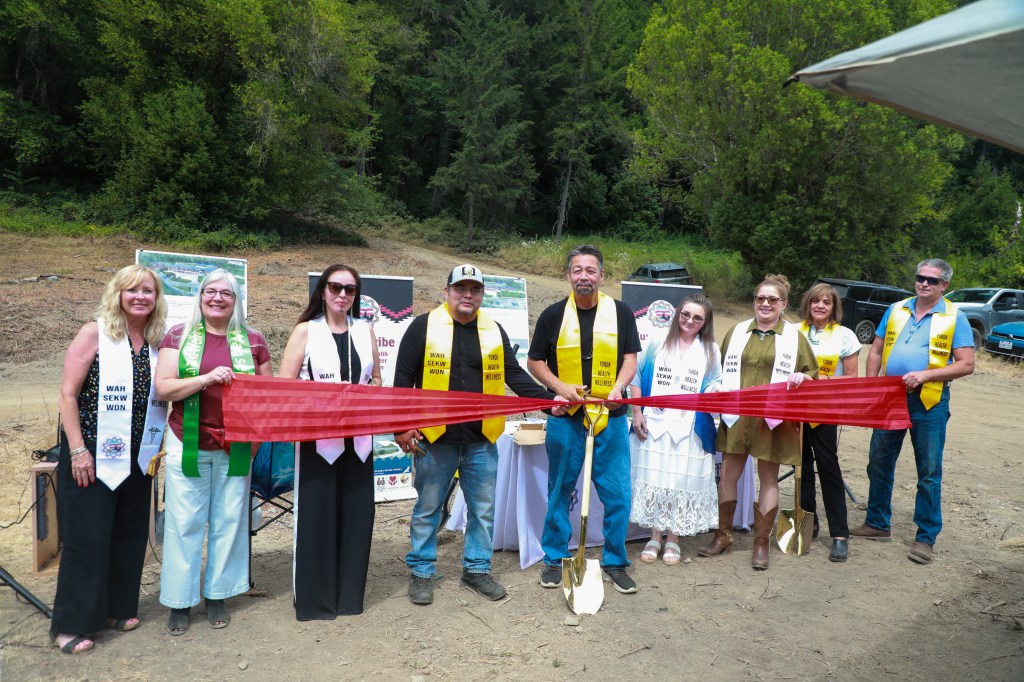
“The Yurok community will soon have access to culturally grounded behavioral health care close to home when they need it most,” said Department of Health Care Services (DHCS) Director Michelle Baass. “Without this center, many Tribal and local community members must continue to travel long distances away from their family and support network for care.”
ABOUT THE WAH-SEKW-WON TREATMENT CENTER (YUROK HEALTH AND WELLNESS): Located near Weitchpec, the 26,000-square-foot Wah-Sekw-Won Treatment Center will include:
WHAT THEY’RE SAYING: “Today’s groundbreaking is more than the start of a building. It is the continuation of our commitment to healing, wellness, and sovereignty,” said Dr. Jacqueline Bae, Director of Health Services, Yurok Tribe (Yurok Health and Wellness Center). “The Wah-Sekw-Won Treatment Center will provide culturally grounded care that honors the strength, resilience, and traditions of the Yurok people. This investment will save lives, strengthen families, and uplift our entire region for generations to come.”
“We are meticulously planning every aspect of this effort to provide high-quality, culturally centered health care services that help individuals restore balance to their lives,” said Chairman of the Yurok Tribe Joseph L. James. “This facility will provide a broad range of supportive care services as part of an expanding, sovereign, community-driven behavioral health system.”
“I want to express sincere gratitude to Governor Gavin Newsom, the California Health and Human Services Agency, and the Department of Health Care Services for their strong commitment to advancing health care access and outcomes in Tribal communities,” said Yurok Tribe Vice Chair Rose Sylvia.
“We fully support the Yurok Tribe’s vision to construct and operate a Tribal wellness center,” said Connie Beck, Director of the Humboldt County Department of Health and Human Services. “This project will bring lasting, positive changes to the region.”
WHY THIS MATTERS: More than 1.2 million adults in California live with a serious mental illness, and 1 in 10 residents meet the criteria for a SUD. Persistent shortages of treatment facilities contribute to rising rates of homelessness and incarceration among people with behavioral health needs. Investments like the Wah-Sekw-Won Treatment Center (Yurok Health and Wellness) help fill these gaps. The project will also support local job creation by expanding the behavioral health workforce in the region, contributing to long-term community stability.
BIG PICTURE: This project is one of 177 statewide, funded through Bond BHCIP resources to support both immediate needs and long-term behavioral health. Administered by DHCS, Bond BHCIP helps communities build, acquire, and expand crisis, residential, and outpatient treatment facilities. To date, the program has supported 333 facilities, adding 6,919 new residential and inpatient beds and 27,561 outpatient treatment slots statewide, surpassing statewide goals just two years after passage. Since 2021, BHCIP has awarded $5.8 billion to strengthen behavioral health care access.
The Yurok Tribe also received awards through BHCIP Round 1: Crisis Care and Mobile Units ($200,000), BHCIP Round 2: Planning Grants ($150,000), nearly $8 million through BHCIP Round 4: Children and Youth, and $12 million through Bond BHCIP Round 2: Unmet Needs to further strengthen the Tribe’s behavioral health infrastructure. The Yurok Youth Center, which broke ground in April 2026, will develop four facilities dedicated to behavioral health services for children and youth, expanding outpatient behavioral health capacity and increasing access to care for thousands of individuals annually.
Backed by strong community partnerships, statewide investments, and new policies, California continues building a comprehensive, equitable behavioral health system that ensures people can access prevention, crisis support, treatment, and long-term recovery services.
###
Office of Communications
(916) 440-7660
DHCSPress@dhcs.ca.gov
SACRAMENTO —The Department of Health Care Services (DHCS) today released the latest quarterly report on Enhanced Care Management (ECM) and Community Supports. These services help Medi-Cal members stay healthier and avoid other, costlier health care services, such as emergency department visits and hospital stays. These data from July through September 2025 (Q3 2025) and a recent report highlight the continued expansion and impact of these services for Medi-Cal members.
“The continued growth of ECM and Community Supports reflects the strength of our statewide partnerships and the dedication of the care managers, providers, and community organizations who show up for Medi-Cal members every day,” said DHCS Director Michelle Baass. “These services are strengthening stability, dignity, and health for members across the state.”
KEY FINDINGS FROM THE Q3 2025 REPORT:
ECM offers California’s highest level of care management, pairing members with a Lead Care Manager who coordinates physical, behavioral, and social services to support stability and improve health outcomes. Community Supports are cost-effective, optional services offered by Medi-Cal managed care plans that address health‑related needs, such as housing instability, nutrition, transitions from institutional care, and chronic condition management.
WHY THIS MATTERS: ECM and Community Supports are key pillars of California’s work to build a more coordinated, equitable, and prevention-oriented Medi-Cal system. These programs help members with complex needs connect to consistent, community‑based supports that stabilize health and reduce the need for higher levels of care. By emphasizing prevention and whole‑person care, ECM and Community Supports continue to improve health outcomes for Medi‑Cal members statewide.
Managed care plans have significantly expanded ECM provider networks, adding more providers serving adults at risk of long-term care and children and youth with the highest needs. DHCS continues to encourage plans to fully utilize contracted providers and ensure services are delivered at the appropriate level of intensity.
COST-EFFECTIVENESS AND LONG-TERM IMPACT: Findings from DHCS’ latest In Lieu of Services (ILOS) annual report show that Community Supports are helping members avoid costlier forms of care. The report studies service costs and utilization before and after members received at least one of the 12 Community Supports authorized as ILOS between January 2023 and June 2024. Ten of the 12 Community Supports studied are already demonstrating cost-effectiveness across applicable Medicaid State Plan service categories, such as emergency department visits, inpatient hospital stays, and nursing facility stays. Key findings include:
Early results underscore long-term value, demonstrating that investing in services that address social drivers of health not only improves member well-being, but also reduces costs across Medi-Cal’s delivery system. For more information, see this fact sheet.
ECM AND COMMUNITY SUPPORTS ARE HERE TO STAY: ECM is a statewide Medi-Cal managed care benefit for members with the most complex needs. Community Supports are also an option for state Medicaid programs, primarily grounded in federal Medicaid managed care regulations and memorialized in approved managed care contracts. Because these services are built into the core structure of Medi-Cal managed care—not temporary pilots—DHCS will continue to oversee implementation, expand provider networks, and support long-term program stability.
This permanency ensures that members, care managers, providers, and community partners can continue investing in relationships and care models that make ECM and Community Supports effective. It also guarantees continuity of intensive care coordination, housing and nutrition supports, behavioral health services, and other critical resources relied upon by hundreds of thousands of Californians.
###
Office of Communications
(916) 440-7660
DHCSPress@dhcs.ca.gov
SACRAMENTO — The federal Centers for Medicare & Medicaid Services (CMS) has taken the extraordinary step of deferring $1.1 billion in federal funding tied to California’s In-Home Supportive Services (IHSS) program.
This action sends a troubling message about the value CMS places on the essential work IHSS caregivers perform every day and creates significant fiscal strain for California, as the State continues ensuring uninterrupted care for more than 900,000 older adults, people with disabilities, and children who rely on IHSS to live safely at home.
IHSS is a federally approved Home and Community-Based Services (HCBS) program and a cornerstone of California’s long-standing efforts to keep people safe at home and out of costly institutional settings, an approach CMS has consistently encouraged for decades. California has built one of the nation’s strongest HCBS systems, expanding access to in-home services in direct alignment with federal policy and the Americans with Disabilities Act’s mandate to support individuals in the most integrated setting appropriate.
“CMS has used what once was a routine payment reconciliation process with states to undermine exactly what federal HCBS policy has long sought to achieve: helping more people remain safely at home, rather than enter institutions for long-term care,” said State Medicaid Director Tyler Sadwith.
CMS asked why IHSS expenditures have grown in recent years. California immediately explained there are three main factors that have driven increases in IHSS program costs:
The IHSS caseload for individuals eligible for federal financial participation Medi-Cal increased from 613,764 in State Fiscal Year (SFY) 2022-23 to 720,988 in SFY 2024-25, a 17.5 percent increase. The average cost per hour went from $19.00 to $21.03 in the same period, representing an increase of 10.7 percent driven by statewide minimum wage increases and county-negotiated wage rates. Wage increases are a tool to recruit and retain qualified workers in a field experiencing a provider shortage. Finally, the average hours per case modestly increased over the same period due to the higher acuity needs of individuals receiving services in the program.
“The growth in IHSS expenditures over the last several years reflects intentional policy choices to expand access to IHSS,” Sadwith added. “It is the direct and foreseeable result of expanding eligibility, increasing hourly reimbursement rates, increasing utilization consistent with demographic change, and substituting home-based care for institutional placement—outcomes that CMS has repeatedly endorsed and promoted through federal approvals of California’s IHSS and HCBS programs because they deliver care at a fraction of institutional costs.”
Despite these longstanding federal policy goals and federal approvals for IHSS program growth, CMS’ deferral notice states that CMS is deferring these funds simply because the growth rate in California’s IHSS program is greater than other states.
In addition, CMS’ letter cites program-integrity concerns, but provides no specifics as to what these concerns are other than “statistical outliers.” Program integrity is a core Medi-Cal function focused on ensuring public dollars are spent the right way through extensive oversight, fraud prevention, and enforcement efforts. California maintains strong, longstanding IHSS oversight systems, including annual assessments, electronic timesheets, verification tools, and coordinated state-county review processes.
“IHSS caregivers help people get out of bed, prepare meals, bathe safely, and remain in their homes with dignity. We are grateful for the work they do every day,” Sadwith added. “CMS’ decision recklessly disregards the people who depend on IHSS and the individuals who care for them every day.”
In addition to the IHSS-related deferral, CMS also included roughly $200 million associated with long-standing administrative and technical claiming items that the state has already been working through with CMS. These items are expected, unrelated to IHSS services or caregiver payments, and part of ongoing federal review processes. DHCS voluntarily implemented a 15 percent reduction in administrative claims beginning in early 2025 as part of a comprehensive review to ensure federal funds are not used for state-only programs. These administrative claims are related to program administration and agency operation costs, not health care. DHCS has submitted comprehensive documentation to CMS demonstrating compliance with claiming processes and updated our reduction to account for this review. DHCS continues to work with CMS to provide support for these updated adjustments.
California calls on CMS to immediately restore IHSS funds and will take every step necessary to protect IHSS members and the caregivers who support them.
###
Office of Communications
(916) 440-7660
DHCSPress@dhcs.ca.gov
SACRAMENTO — The Department of Health Care Services (DHCS) today released its 2025 BrightLife Kids and Soluna Impact Report, detailing how California’s free behavioral health platforms have reached more than 500,000 users, including children, youth, young adults, and families, across all 58 California counties. Launched in 2024, the platforms offer free confidential mental health support and resources to all Californians, regardless of insurance or immigration status.
“The data reinforce what we’ve heard from children and families across California: Soluna and BrightLife Kids are a key resource to support our youth,” said DHCS Director Michelle Baass. “By investing in easy to use, accessible tools, California is improving the mental health of children today so they can have the bright futures they deserve.”
WHY THIS MATTERS: BrightLife Kids and Soluna reduce barriers to mental health care, particularly for youth in rural areas, low-income communities, and underserved populations. Early data show the platforms are advancing equity, with most users coming from communities with the greatest social and health inequities.
The report highlights substantial growth resulting from community outreach and engagement: more than 112,000 coaching sessions delivered through January 2026, with 98 percent of participants reporting satisfaction. Half of Soluna users and three quarters of BrightLife Kids users report this is their first time accessing professional behavioral health support. Additionally, more than 5,000 Californians have been referred to community-based providers when they need a higher level of care or other social support.
Early evaluation data—now under peer review—from Northwestern University’s Lab for Scalable Mental Health show Soluna users experienced significant reductions in distress after one month, with benefits sustained at three months. BrightLife Kids users similarly reported progress, with parents noting improved ability to support their children.
WHAT THEY ARE SAYING: “Before Soluna, I didn’t really know where to start if I wanted to talk to someone professionally…There’s a lot of really quick, fast features that don’t require a lot of time, but do have a really strong impact,” said Sierra (below), a Soluna young adult ambassador.
“BrightLife Kids helps me so much by giving me the tools on how to be a better, more present mom,” said Lillian (below), parent of a 6-year-old daughter.
ABOUT THE PLATFORMS: BrightLife Kids and Soluna offer free coaching, peer communities, personalized goalsetting tools, and care navigation. Services are available online, in mobile app stores, in English and Spanish, and through telephone-based coaching available in 17 languages.
BIGGER PICTURE: The platforms are part of California’s CalHOPE program and the Children and Youth Behavioral Health Initiative (CYBHI), both of which represent key components of Governor Newsom’s Master Plan for Kids’ Mental Health, a historic statewide investment designed to strengthen mental health and well-being for children and youth using a comprehensive “whole child” approach.
DHCS encourages families and youth ages 0–25 to access free behavioral health support through BrightLife Kids and Soluna and invites partners to review the full 2025 impact report to learn more about statewide outcomes and impact.
###
Office of Communications
(916) 440-7660
DHCSPress@dhcs.ca.gov
SACRAMENTO — The California Department of Health Care Services (DHCS) and the California Department of Justice (DOJ), working in close coordination with the California Department of Public Health (CDPH), have taken decisive action to dismantle a large-scale identity theft and hospice fraud scheme targeting the Medi-Cal program. This coordinated enforcement effort underscores California’s commitment to protecting Medi-Cal members and safeguarding taxpayer dollars from fraud, waste, and abuse.
Working together, DHCS and DOJ’s Division of Medi-Cal Fraud and Elder Abuse (DMFEA) confirmed that transnational criminal networks used stolen identities to fraudulently enroll individuals in Medi-Cal and bill for hospice services that were never provided. The scheme involved 14 fraudulent hospice providers and resulted in more than $267 million in improper billing. DHCS is working closely with federal partners to determine any required repayment obligations under Medicaid rules, and will pursue recovery from the fraudulent actors wherever possible, with recovery efforts already underway, including the recovery of more than $70 million to date in coordination with state and federal law enforcement.
“For years, California has led the charge to protect public programs from fraud and abuse. We hold accountable to the fullest extent of the law anyone who tries to rip off taxpayers and take advantage of public programs, particularly those as sensitive as hospice care. I thank DHCS and DOJ for their swift work to bring these charges forward. Since these are state charges, Donald Trump cannot pardon these individuals in exchange for campaign donations,” said Governor Gavin Newsom.
California acted swiftly to protect Medi-Cal and taxpayer dollars by:
“This investigation demonstrates what California can accomplish when our state agencies work together with urgency and purpose,” said California Health and Human Services Secretary Kim Johnson. “Protecting the millions of Californians who depend on Medi-Cal to meet their health needs is our priority, and we will not tolerate bad actors. DHCS moved swiftly to stop these payments, disenroll fraudulent accounts, and refer perpetrators for criminal prosecution. Our work is not done, and we will continue strengthening the safeguards that keep Medi-Cal sound and trustworthy for the people it was designed to serve.”
Large-scale fraud involving identity theft and coordinated criminal networks requires careful, evidence-based investigation. DHCS and its partners must confirm each affected identity, avoid alerting perpetrators, and build cases that meet legal standards for suspensions, license actions, and prosecution. DOJ has executed search warrants, made arrests, and filed criminal charges to dismantle the network and ensure the perpetrators face full accountability under state law. This deliberate approach protects legitimate Medi-Cal members and ensures enforcement actions are strong enough to hold bad actors fully accountable.
This action builds on California’s statewide hospice enforcement efforts, including the CDPH-led California Hospice Fraud Task Force, which strengthens coordination among state departments to identify fraud, share information, and act quickly to stop bad actors. These efforts have resulted in more than 280 hospice license revocations and hundreds of ongoing investigations.
“Fraud is a direct attack on the health and well‑being of Medi‑Cal members, and we will not hesitate to act,” said DHCS Director Michelle Baass. “Our safeguards worked quickly and effectively—identifying suspicious activity, stopping improper payments in their tracks, and prompting immediate suspension of the providers involved. In coordination with the California Department of Justice’s Division of Medi‑Cal Fraud and Elder Abuse, California’s Medicaid Fraud Control Unit, we are pursuing full accountability while reinforcing our oversight systems to protect Medi-Cal members and the taxpayers who fund this program.”
“This isn’t a political game for us. This is about protecting taxpayer dollars, protecting programs sick and vulnerable Californians rely on, and protecting our state,” said Attorney General Rob Bonta. “Over the life of this fraud scheme, not a single legitimate hospice service was ever provided, yet millions were billed in a brazen, calculated scheme that exploited the Medi-Cal system. This wasn’t a mistake or a loophole; it was deliberate fraud. This kind of abuse undermines trust, drains critical resources, and threatens care for those who truly depend on it. This is a perfect example that we have taken a firm stand to investigate, prosecute, and shut down hospice fraud wherever it exists.”
A MULTIPRONGED APPROACH TO FRAUD PREVENTION: DHCS’ program integrity safeguards were critical in detecting and stopping this scheme, and the Department is implementing additional measures to prevent similar fraud from occurring in the future. The comprehensive strategy includes:
DHCS manages more than $200 billion annually to serve more than 14 million Californians who rely on Medi-Cal. Protecting program integrity ensures that every dollar goes to those who truly need care. To proactively combat hospice fraud, Governor Gavin Newsom signed legislation in 2021 that banned new hospice licenses in California, a moratorium that remains in effect. He also created the statewide Hospice Fraud Task Force to ensure rapid information-sharing and support license revocation, payment suspension, and criminal case development. Learn more about DHCS program integrity.
REPORTING SUSPECTED FRAUD: DHCS encourages anyone who suspects Medi-Cal fraud to report it immediately:
###
Office of Communications
(916) 440-7660
DHCSPress@dhcs.ca.gov
WHAT YOU NEED TO KNOW: California continues its multi-agency actions to protect Californians and taxpayer dollars from fraudulent or unsafe hospice activity. Yesterday, investigators from the California Department of Public Health (CDPH), California Department of Health Care Services (DHCS), and California Department of Tax and Fee Administration (CDTFA) conducted onsite compliance reviews in Los Angeles County.
LOS ANGELES – As part of ongoing efforts to protect patients and safeguard public health programs, approximately 80 surveyors and investigators from CDPH, DHCS, CDTFA, and partner agencies conducted compliance reviews at a Van Nuys location subject to “viral” videos regarding hospice care.
While online claims pointed to numerous hospices tied to potential fraud at this location, nearly 9 out of 10 entities that have utilized this address for their business cannot even bill the state-run Medi-Cal program for hospice care.
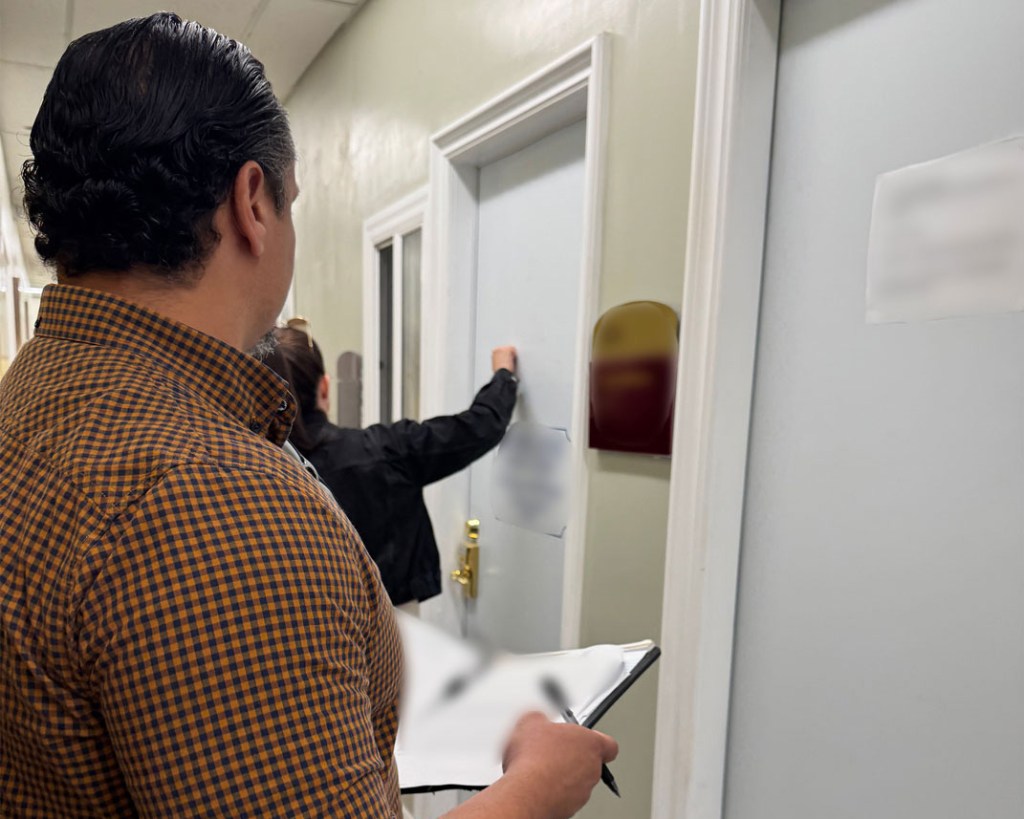
A review of state records tied to this location identified the following:
When some of the businesses sought to establish hospices, California stopped them. In 2021, California took decisive action to place a moratorium on new hospice licenses. The state’s prevention efforts worked: Upwards of 60 percent of hospice entities using the Van Nuys address were denied a license because of California’s moratorium.
PROTECTING THE HOSPICE SYSTEM: That hasn’t slowed enforcement. The state treats all reports of regulatory non-compliance, whether received in-person, through the mail, or online as complaints, from members of the public and is inspecting them under its purview as part of its everyday work to protect taxpayers, root out fraud, and increase the quality of hospice care.
“As part of our ongoing work, we are in Los Angeles County actively investigating hospice providers,” said CDPH Director and State Public Health Officer Dr. Erica Pan. “Protecting patients and safeguarding the integrity of our health care system remains our top priority, and we will continue to hold providers accountable.”
“DHCS is shoulder to shoulder with CDPH on this effort,” said DHCS Director Michelle Baass. “Whether our teams are in the field conducting reviews or verifying enrollment and billing, when we suspect fraud, we act. And when we determine there is a credible allegation of fraud, we refer cases to the California Department of Justice. Our shared commitment is protecting Medi Cal members, safeguarding taxpayer dollars, and ensuring hospice services are delivered safely, legally, and with integrity.”
“The Department of Tax and Fee Administration is happy to lend our expertise and support to our partner agencies to review concerns and verify compliance,” said CDTFA Director Trista Gonzalez. “Our focus is on ensuring businesses are operating within the law and that public funds are protected.”
HOLDING BAD ACTORS ACCOUNTABLE: Since Governor Newsom’s 2021 moratorium, California has revoked 280+ hospice licenses and placed 300 more under investigation — among the most aggressive enforcement actions in the nation. In addition to CDPH’s licensing enforcement, DHCS has strengthened hospice billing safeguards by requiring its own verification of hospice elections before any claim can process, using a DHCS issued indicator code that only appears after documentation is approved.
Under the Trump Administration, the Centers for Medicare & Medicaid Services (CMS) suspended implementation of the Hospice Special Focus Program, a federally required initiative designed to identify and increase scrutiny of poorly performing hospices. The program would have driven more frequent inspections and stronger federal enforcement.
CDPH licenses and oversees hospice providers and investigates complaints, and DHCS audits Medi-Cal billing. However, the federal government administers Medicare, which accounts for the vast majority of hospice spending, and they reimburse, monitor, and investigate federal Medicare payments. The state is not involved in Medicare billing or payment processing.
California welcomes continued partnership with CMS as the federal government advances its own hospice oversight efforts, and will continue to share information and coordinate where appropriate to support shared program integrity goals. California’s work to prevent and stop fraud and hold fraudsters accountable is ongoing, and further details regarding these ongoing investigations will remain confidential to protect the integrity of this critical law enforcement work.
See how California is fighting fraud in state programs at stopfraud.ca.gov, and view B-roll of hospice compliance reviews. For more information about the decisive actions California has taken in hospice fraud enforcement, please see the Governor’s March and January news releases.
###
Office of Communications
(916) 440-7660
DHCSPress@dhcs.ca.gov