
Quality Care Initiatives
메디칼 가입자를 위한 건강 결과 개선
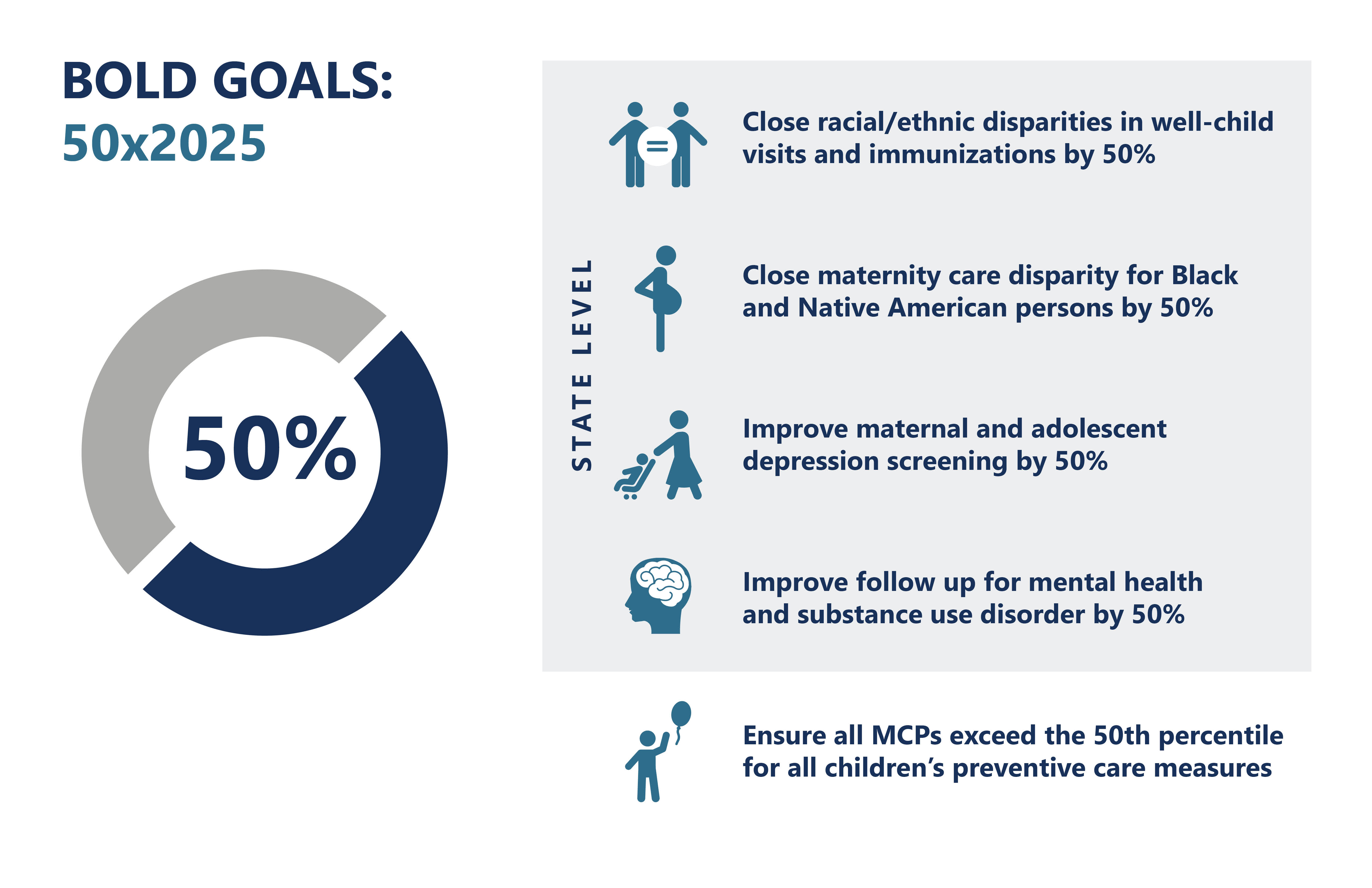
The California Department of Health Care Services (DHCS) is committed to achieving excellence in the quality and equity of care for Medi-Cal members. Through broader efforts focused on Medi-Cal Transformation, as well as through the ambitious 2022 Comprehensive Quality Strategy, DHCS outlined a Population Health Management approach grounded in high-quality primary care as well as the 50×2025 Bold Goals Initiative to improve health care outcomes for children’s preventive health, maternity care and birth equity, and behavioral health integration.
회원의 목소리 중심
DHCS의 질적 의료 서비스 및 건강 형평성에 대한 비전의 핵심은 메디칼(Medi-Cal) 회원들이 정책 설계 및 프로그램의 중심에 있다는 믿음입니다.
건강 형평성 로드맵: 건강 형평성 로드맵은 데이터 수집, 의료 서비스 격차 파악, 고위험군을 위한 맞춤형 개입을 통해 건강 불평등을 줄이기 위한 DHCS의 계획을 설명합니다. 주 전역을 순회하며 의견 수렴 투어를 실시하여 불평등을 경험하는 지역 사회 구성원들로부터 직접적인 피드백을 수집했습니다. 이는 다양한 구성원 간의 투명성과 신뢰를 구축하는 것을 목표로 하는 이 로드맵을 수립하는 데 도움이 되었습니다.
회원 자문 위원회 2023년 , DHCS는 메디칼 회원들이 DHCS 국장 및 경영진에게 직접 의견을 전달할 수 있는 전용 포럼인 메디칼 회원 자문 위원회(MMAC)를 출범시켰습니다. 위원회는 전원이 메디칼 회원과 가족 간병인으로 구성되어 있어 다양한 관점이 반영되도록 보장합니다.
품질에 대한 투명성 및 책임성 향상
정신건강 분야의 질 측정: DHCS는 오랫동안 메디칼 관리형 의료 플랜(MCP)의 질적 성과를 추적해 왔지만, 2022년부터는 카운티 정신건강 플랜의 임상적 질적 결과를 측정하기 위한 정신건강 책임 세트(BHAS) 도 구축했습니다.
투명성 개선: 지난 3년 동안 DHCS는 전달 시스템 및 이니셔티브 전반의 품질 및 형평성 결과에 대한 공개 보고를 대폭 늘려 투명성을 개선하고 파트너가 데이터를 사용하여 개선을 추진할 수 있도록 역량을 강화했습니다. 여기에는 다음이 포함되지만 이에 국한되지는 않습니다:
제재 및 책임: 품질 기준을 충족하지 못하는 MCP는 시정 조치 계획, 재정적 제재 또는 심각한 경우 계약 해지에 직면할 수 있습니다. 제재는 계획이 양질의 진료를 우선시하고 필요한 경우 서비스 제공을 개선하도록 보장합니다. 지난 3년간 DHCS는 MCP( 정신건강보험)와 BHP( 행동건강보험 ) 모두에 대한 품질 제재 정책을 강화해 왔습니다. 또한, DHCS 2022년, 2023년, 2024년에 DHCS의 질적 성과 목표(전국 50번째 백분위수) 달성하지 못한 MCP에 재정적 제재를 가했습니다.
품질 개선 지원: DHCS는 Medi-Cal 회원에 대한 의료 서비스를 향상시키기 위해 MCP와 협력하여 다음과 같은 여러 품질 개선 노력을 기울였습니다.
- 메디케어 센터 & 메디케이드 서비스(CMS) 유아 웰-차일드 방문 학습 협력에 참여합니다.
- 모든 MCP가 지역 장벽, 격차, 잠재적 커뮤니티 파트너에 대해 논의할 수 있는 새로운 지역 협력체를 구축합니다.
- 2023년에 품질 및 형평성 개선의 성공적인 전략을 공유하고 네트워크를 구축하기 위한 포럼으로 DHCS 품질 & 건강 형평성 컨퍼런스를 개최합니다.
- 2024년에 두 개의 새로운 주 전체 학습 협력체를 출범시킬 예정인데, 하나는 아동 예방 서비스의 개선 및 확대를 목표로 하고, 다른 하나는 행동 건강 통합과 MCP(다학제 진료 계획)와 카운티 행동 건강 계획 간의 협력 강화를 목표로 합니다.
품질 향상을 위한 재정적 인센티브 & 형평성
품질 보류 및 인센티브 프로그램: 2024년, DHCS는 품질 보류 및 인센티브(QWI) 프로그램을 시행했습니다. 이 프로그램은 DHCS의 종합 품질 전략 및 과감한 목표 에 부합하는 품질 지표에서 성과를 개선하도록 MCP(관리형 의료 서비스 제공자)에게 인센티브를 제공합니다. 인센티브를 받지 못할 경우 정액 지급액의 0.5%를 보류하며, 품질, 환자 만족도 및 효율성에 대한 성과 목표를 달성하면 보류된 금액을 다시 돌려받을 수 있습니다.
자동 배정 인센티브 프로그램: 이 프로그램은 특정 카운티(MCP가 두 개 이상 있는 카운티)에서 실적이 우수한 MCP에 대해 신규 메디칼 회원(MCP를 직접 선택하지 않는 회원) 유치 비율을 높여 인센티브를 제공합니다. 2024년, DHCS는 종합 품질 전략 및 과감한 목표에 부합하는 특정 품질 지표에 대한 MCP 성과에만 초점을 맞추도록 오랜 기간 시행해 온 자동 배정 프로그램을 개정했습니다.
일차 진료 지출 및 대안적 지불 모델: 2024년부터 모든 의료보험조합(MCP)은 지출액 중 일차 진료에 사용되는 비율과 질적 우수성과 형평성을 보장하기 위해 의료 제공자와 함께 사용하는 대안적 지불 모델을 어떻게 구현하고 있는지 DHCS에 보고해야 합니다. DHCS는 Covered California 및 CalPERS를 포함한 주요 주 정부 파트너와 협력하여 공공 구매자 전반에 걸쳐 이러한 계약 요건을 일치시켰습니다 .
Equity and Practice Transformation Payments: In 2024, DHCS launched the Equity and Practice Transformation Payment Program, a $140 million investment in primary care practices to advance health equity and reduce disparities by working on upstream care models, improving quality of care, value-based payment models, and practice transformation.
커뮤니티에 대한 투자
MCP 커뮤니티 재투자: 2024년부터 수익을 창출하는 모든 MCP는 해당 수익의 7.5-15%를 지역 사회의 필요에 따라 정보를 제공하고 안내하는 지역 사회 재투자 활동에 재투자해야 합니다.
캘리포니아 메디칼 발전 및 혁신(CalAIM): CalAIM 본 프로그램은 기존 의료 서비스의 대안으로 주거 지원, 맞춤형 식단, 회복 주택과 같은 향상된 의료 관리 및 지역사회 지원 서비스를 통해 메디칼(Medi-Cal) 회원에 대한 의료 서비스를 개선하고자 합니다.
정신건강 서비스: DHCS는 원격진료 확대, 정신건강 서비스와 1차 진료 통합, 정신건강 연속성 인프라 프로그램 (BHCIP) 지원을 위한 투자를 크게 늘렸습니다. 새로운 치료 시설과 지역사회 기반 시설을 건설하기 위해.
- BH-CONNECT 및 행동 건강 혁신 이니셔티브는 행동 건강 지원이 필요한 개인에게 조정된 아웃리치, 탐색 및 참여 서비스를 제공하여 치료 접근성을 향상시키고 있습니다.