Official website of the State of California
Translate

SACRAMENTO — The California Department of Health Care Services (DHCS) today released the impact report on the first year of California’s Justice-Involved Reentry Initiative. This first-in-the-nation program provides targeted Medi-Cal services to incarcerated individuals up to 90 days before release, closing critical gaps in care and supporting safer, more stable returns to communities.
“California is leading the way in implementing safer, more effective reentry strategies,” said DHCS Director Michelle Baass. “By connecting people to community-based care before they leave incarceration, we’re improving individual health, strengthening families, and building safer communities. This initiative shows what’s possible when agencies work together to create real, lasting change.”
IMPACT TO DATE: The report highlights significant progress in the first year of the initiative, including strong collaboration among state agencies, counties, managed care plans, and community partners. The report also provides stories of individuals who have benefited from these services. In its first year, the initiative delivered more than 159,000 billable pre-release services and prescriptions and enrolled more than 24,000 incarcerated individuals in Medi-Cal prior to release.
“Before this initiative, without consistent communication, medical and corrections teams, despite being in the same facility, weren’t always aligned,” said Yuba County Project Manager Stephanie Lucio. “This effort has truly brought everyone to the table. Collaborating, sharing expertise, and building a solid reentry plan together has been invaluable.”
October 2025 marked one year since the initiative launched, a milestone for this cross-agency effort involving DHCS, the California Department of Corrections and Rehabilitation (CDCR) and California Correctional Health Care Services (CCHCS), county agencies (including county behavioral health, public health, probation, social services, and sheriff’s offices), Medi-Cal managed care plans, and community-based organizations. Since October 2024, all 31 state prison facilities and 34 county jails and youth correctional facilities across 14 counties have launched pre-release services. Nearly two dozen additional facilities are preparing to begin offering services to their populations in the next few months. All correctional facilities statewide are required to go live before October 1, 2026.
WHY THIS IS IMPORTANT: People leaving incarceration often face untreated health conditions and lack access to care, increasing risks of overdose, hospitalization, and recidivism. By starting Medi-Cal before release and coordinating connections to care in the community, California is reducing these risks and improving health equity. The Justice-Involved Reentry Initiative includes:
“We initiate reentry planning and Medi-Cal coverage well before a patient is due to be released, ensuring a warm handoff to community services,” said Dawn Freeman, the CCHCS Chief Nurse Executive overseeing the Justice-Involved Reentry Initiative. “It’s provided enormous reassurance and a greater sense of stability among this population, a critical component for health care and substance use treatment. Individuals expressed they feel better prepared knowing they have available resources, someone to connect with, and are no longer alone.”
This focus on coordinated, person centered care was highlighted in a recent New York Times article, which examined how California is implementing systemic changes to support individuals returning to their communities. For more information, see the Justice-Involved Reentry Initiative webpage.
###
Office of Communications
(916) 440-7660
DHCSPress@dhcs.ca.gov
SACRAMENTO — Continuing California’s work to expand and modernize its behavioral health system, the California Department of Health Care Services (DHCS), Homeboy Industries, and community partners today broke ground on Home of the Angels, a new campus in Los Angeles supported by California’s voter-approved Behavioral Health Infrastructure Bond Act and DHCS’ Behavioral Health Continuum Infrastructure Program (BHCIP).
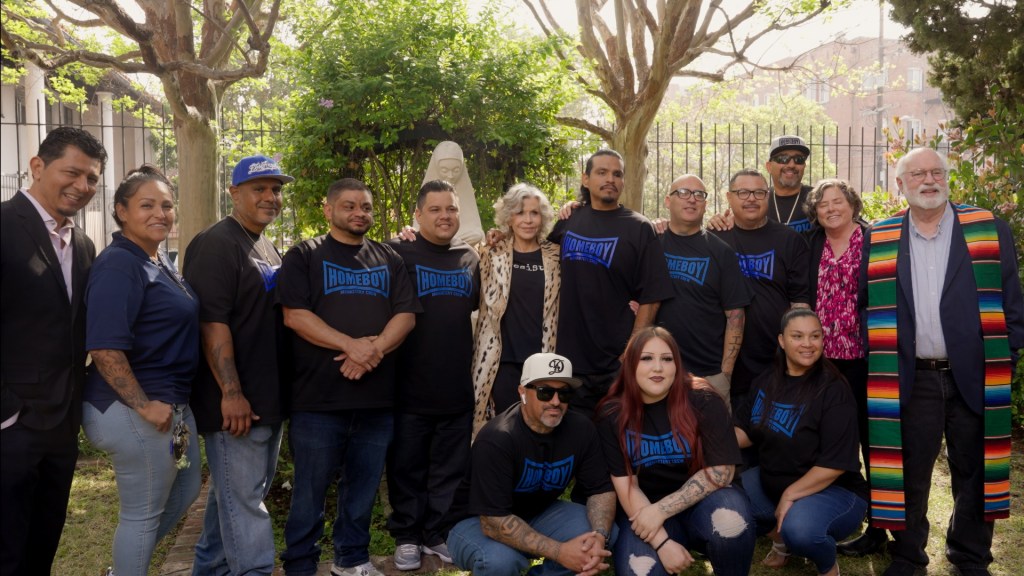
The project was awarded nearly $25 million in Bond BHCIP Round 1: Launch Ready funding, significantly expanding residential, outpatient, and peer-based support for individuals seeking substance use disorder treatment, particularly those who are formerly incarcerated, returning from the justice system, and part of the Homeboy Industries community.
When completed, the Home of the Angels campus will include:
The campus brings together residential treatment, peer respite, and outpatient services in one integrated setting, allowing participants to move seamlessly through each level of care as their needs evolve. The project also introduces licensed residential treatment on a Homeboy Industries campus for the first time—an important innovation that strengthens continuity of care, reduces reliance on outside referrals, and expands the organization’s comprehensive and compassionate reentry‑focused support system.
“Home of the Angels reflects the community-rooted solutions that the Newsom Administration is advancing, bringing treatment and recovery services under one roof and closer to the people who need them,” said DHCS Director Michelle Baass. “This investment expands access to care for Californians returning home from the justice system, supporting dignity, stability, and long-term recovery.”
WHY THIS MATTERS: Founded in Los Angeles, Homeboy Industries is a nationally recognized nonprofit organization supporting formerly incarcerated and formerly gang-involved individuals. Its trauma-informed, culturally responsive services include behavioral health supports, substance use disorder treatment, case management, and reentry-focused wraparound services rooted in healing and community connection.
Home of the Angels supports DHCS’ broader reentry initiative efforts, including the Justice-Involved Reentry Initiative, by:
“Healing happens when people are received with tenderness and held in community,” said Father Greg Boyle, Founder of Homeboy Industries. “Home of the Angels reflects what we have always believed at Homeboy Industries: that people heal when they are seen, cherished, and given a place to belong. By creating spaces rooted in love and dignity, we make room for restoration, hope, and new beginnings.”
BIG PICTURE: Bond BHCIP is a statewide initiative administered by DHCS that helps communities build, acquire, and expand treatment facilities, filling in longstanding gaps in crisis, residential, and outpatient behavioral health care facilities. Proposition 1 has funded 177 projects across 333 facilities, supporting 6,919 new residential and inpatient beds and 27,561 outpatient treatment slots, surpassing statewide goals just two years after passage. Since 2021, BHCIP has awarded $5.8 billion to strengthen crisis, residential, and outpatient care across the state.
Backed by significant statewide investments, new policies, and strong community partnerships, California is building a comprehensive and equitable continuum of behavioral health care that ensures people can access prevention, crisis support, treatment, and long term recovery services when and where they need them.
BIGGER PICTURE: California’s investment in Home of the Angels is part of the broader transformation underway through Proposition 1 and Governor Gavin Newsom’s Mental Health for All strategy. Earlier this month, the Governor announced the redevelopment of six vacant state owned buildings into the new Los Angeles County Care Community, supported by a $65 million Proposition 1 investment to create 162 new housing and treatment beds. This project, alongside BHCIP funded efforts like Home of the Angels, reflects the Administration’s comprehensive work to expand access to behavioral health care, increase treatment capacity, and help Californians experiencing serious mental illness, substance use disorders, or homelessness get the care and stability they need.
###
Office of Communications
(916) 440-7660
DHCSPress@dhcs.ca.gov
Proposition 1 Paves the Way for Inner-Tribal Wellness Village to Expand Substance Use Disorder and Mental Health Treatment Services in San Diego County
SACRAMENTO — Delivering on Governor Gavin Newsom’s commitment to expand and modernize California’s behavioral health system, the California Department of Health Care Services (DHCS) joined Inner-Tribal Treatment and community partners on March 20 to break ground on the new Inner-Tribal Wellness Village in Pauma Valley. Supported by California’s voter-approved Behavioral Health Infrastructure Bond Act and the state’s Behavioral Health Continuum Infrastructure Program (BHCIP), the project includes nearly $20 million in Bond BHCIP Round 1: Launch Ready funding to significantly expand regional substance use disorder (SUD) and mental health treatment capacity. It is one of hundreds of Proposition 1 investments strengthening California’s continuum of community-based behavioral health care.
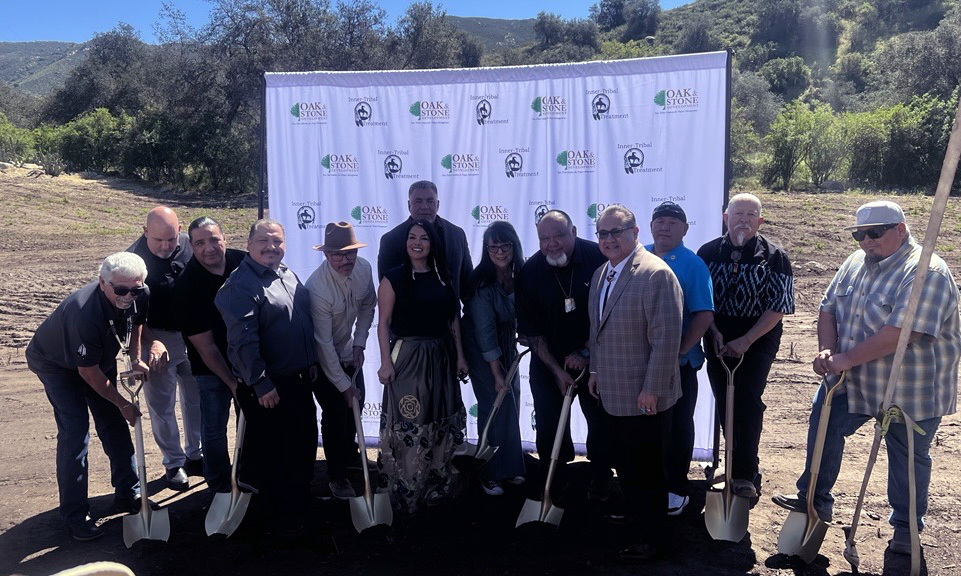
“California’s investment reflects a generational commitment to equity and healing,” said DHCS Director Michelle Baass. “The Inner-Tribal Wellness Village will provide spaces where individuals can find safety, dignity, and connection, grounded in culture and built around the needs of the people it serves.”
The campus will serve Tribal communities throughout San Diego County and surrounding regions who need behavioral health treatment and support. When completed, the Inner-Tribal Wellness Village will include a 60‑bed adult residential SUD treatment facility and a community mental health clinic with 120 outpatient slots, serving an estimated 500 individuals annually.
WHY THIS MATTERS: Since 2021, Inner-Tribal Treatment has provided culturally affirming services to 18 federally recognized Tribes in San Diego County and 12 Tribes in Riverside and San Bernardino counties. The new campus will expand that work by blending traditional healing practices with evidence-based clinical treatment, creating a holistic environment for care and recovery. Campus features will include spaces for talking circles, smudging, traditional teachings, and cultural ceremonies as well as clinical modalities, including cognitive behavioral therapy and other proven treatments that help people build skills for long-term wellness.
“This initiative represents a vital step forward in enhancing mental health, substance use disorder, and wellness services for our Tribal communities, who have historically faced significant disparities in access to care,” said Robert Aguilar, Founder and CEO of Inner-Tribal Treatment. “The Inner-Tribal Wellness Village will serve as a crucial hub for healing in a stigma-free environment, empowering individuals to take charge of their health and well-being in a culturally and spiritually affirming space.”
The Inner‑Tribal Wellness Village reflects a sustained investment that expands regional treatment capacity and moves California closer to its goal of a stronger, more equitable, and more accountable behavioral health system.
BIGGER PICTURE: Proposition 1, approved by California voters in March 2024, authorized up to $4.4 billion in bond funding for DHCS to expand behavioral health treatment infrastructure statewide. The initiative is creating thousands of new residential beds and outpatient treatment slots, prioritizing high‑need communities, including Tribal and rural regions. Under Proposition 1:
California is building a comprehensive continuum of behavioral health care, offering a full range of supports, from prevention and early intervention to treatment, crisis response, and long-term recovery. This approach is designed to ensure that every Californian, especially those who have historically faced the greatest barriers to care, can access high-quality mental health and SUD treatment when and where they need it.
Backed by significant investments, new policies, and strong partnerships, California is expanding treatment services and supportive housing while strengthening and diversifying the workforce. By prioritizing prevention, early support, and services tailored to individual needs, California is helping people get the right care at the right time, leading to better health outcomes and stronger communities statewide.
###
Office of Communications
(916) 440-7660
DHCSPress@dhcs.ca.gov
###
Office of Communications
(916) 440-7660
DHCSPress@dhcs.ca.gov
###
Office of Communications
(916) 440-7660
DHCSPress@dhcs.ca.gov
SACRAMENTO — The Department of Health Care Services (DHCS) is coordinating a statewide Smile, California bilingual outreach campaign to help children and families understand the importance of early and regular dental care and to encourage the use of free Medi-Cal Dental preventive services. The campaign includes easy-to-use English and Spanish-language materials that explain what families can expect during dental visits and how to access care under Medi-Cal. It aims to reduce barriers to care by helping children feel prepared and parents feel confident about scheduling preventive dental visits.
“Dental problems don’t just cause pain—they interrupt learning, impact confidence, and widen achievement gaps,” said Dana Durham, Chief of DHCS’ Medi-Cal Dental Services Division. “The good news is that most of these issues are preventable, and Medi-Cal covers regular dental care for children at no cost to families.”
Throughout National Children’s Dental Health Month, Smile, California is encouraging parents, schools, and community partners to help children build healthy habits, including brushing twice a day, flossing daily, eating nutritious foods, and visiting the dentist regularly.
To support families, Smile, California released a new digital storybook, Jasmín Goes to the Dentist, in English and Spanish. It walks children step-by-step through a regular check-up. From the bright light above the chair to the tools hygienists use to clean teeth, the story helps normalize the experience, showing children that dental visits can be comfortable, friendly, and even fun.
The booklet also includes a special section for parents that encourages talking openly about dental care at home and reminds families that Medi-Cal covers preventive and restorative services for the whole family at no cost.
WHY THIS MATTERS: Dental problems are one of the most common, yet preventable, health issues affecting children in California. When children receive preventive care early and regularly, families can avoid unnecessary dental pain, reduce missed school days, and decrease the need for emergency treatment later in life. The new bilingual campaign supports families in navigating dental care and understanding covered benefits through Medi-Cal Dental.
Recent data show that more than 350,000 children and teens missed at least one school day because of dental issues, demonstrating the impact untreated dental problems can have on student well-being and their ability to learn, adding up to more than 869,000 lost school days and a cost of roughly $60 million to school districts.
ABOUT MEDI-CAL DENTAL: All children and teens enrolled in Medi-Cal qualify for two free dental check-ups each year, along with cleanings, fluoride treatments, sealants, and other preventive services. Adults age 21 and older can receive one free dental check-up each year, in addition to other covered services. Parents can find a Medi-Cal dentist and learn more at SmileCalifornia.org.
###
Office of Communications
(916) 440-7660
DHCSPress@dhcs.ca.gov
SACRAMENTO — The California Department of Health Care Services (DHCS) today announced the release of the Implementation Plan for New Federal Eligibility and Enrollment Changes Under H.R. 1, outlining the state’s approach to implementing new federal requirements under H.R. 1. These changes, which start as early as October 2026, are expected to impact millions of Californians statewide.
“California is committed to implementing these federally required changes in a way that protects coverage and supports our members,” said DHCS Director Michelle Baass. “Our goal is to make this transition as smooth as possible by providing clear information, reducing administrative burdens, and working closely with members, counties, health plans, and community partners.”
DHCS is working to minimize disruption and maintain continuity of coverage for Medi-Cal members. The plan provides details on upcoming changes, guiding principles for implementation, and resources for members and stakeholders to prepare for transitions. About 2 million Medi-Cal members, primarily within the new adult expansion group, are at risk of losing health coverage due to these federal changes.
Key principles of the plan include:
DHCS will host an All-Comer Webinar on February 5 to review the plan and answer questions. Learn more and read the plan.
###
Office of Communications
(916) 440-7660
DHCSPress@dhcs.ca.gov
New data show notable growth in Enhanced Care Management and Community Supports
SACRAMENTO — The Department of Health Care Services (DHCS) today released new data showing continued growth and impact from Enhanced Care Management (ECM) and Community Supports, key components of California’s Medi-Cal transformation under the California Advancing and Innovating Medi-Cal (CalAIM) initiative.
“These services help Medi-Cal members stay healthier and avoid other, costlier care, such as emergency department visits and hospital stays,” said DHCS Director Michelle Baass. “We appreciate the hard work and commitment of Medi-Cal managed care plan providers and partners. Together, we are building a health care delivery system that supports whole-person care for Medi-Cal members.”
The latest quarterly report includes trends since January 2022 and new data from April through June 2025, covering state, county, and managed care plan-level information on members served, service use, and provider networks.
ECM REACHES MORE CALIFORNIANS: ECM helps people with complex health and social needs, including homelessness, serious mental illness, or frequent hospital visits, coordinate the care they need, wherever they are. Since its launch in January 2022, ECM has connected more than 451,000 Medi-Cal members to high-touch, person-centered care coordination through a Lead Care Manager who helps navigate physical, behavioral, and social services.
In the second quarter of 2025, ECM enrollment rose, particularly among children and youth. More than 47,000 children and youth received ECM, a 102 percent increase from the same period last year. Nearly 3,600 adults transitioning from incarceration and more than 16,000 children and youth experiencing homelessness also received ECM, increases of 83 percent and 164 percent compared to the same period last year, respectively. To meet this demand, provider networks expanded significantly, with providers serving these populations increasing by more than 80 percent year-over-year.
“Every expansion means more Californians have access to services that keep them stable, healthy, and supported,” said State Medicaid Director Tyler Sadwith. “We’re focused on making these programs even more accessible and responsive to the communities we serve.”
COMMUNITY SUPPORTS GROWTH: Community Supports provide cost-effective, community-based alternatives to traditional medical care, addressing housing, nutrition, and other social drivers of health. Since launching in January 2022, these services have become a cornerstone of whole-person care in Medi-Cal.
As of June 2025, more than 520,000 Medi-Cal members have accessed Community Supports, with more than 1.3 million services delivered statewide. Access continues to expand, as nearly all Medi-Cal members now have access to at least 10 Community Supports, and most (94 percent) can choose from the full suite of services. Medically tailored meals and housing-related services remain among the most utilized.
WHY THIS IS IMPORTANT: The growth of ECM and Community Supports reflects California’s commitment. These services are critical tools in addressing challenges, such as homelessness, behavioral health access, and support for families and youth with complex needs.
As a part of this commitment to improving health outcomes, California expanded the Justice-Involved Reentry Initiative, which requires managed care plans to provide care coordination and medical and behavioral health services up to 90 days before release, ensuring continuity of care during reentry to communities. This initiative, which is supporting members with pre-release services and making connections for ongoing care through post-release ECM, went live in October 2024 with three counties, expanded to state prisons in February 2025, and is now active in 13 counties. All counties statewide are required to offer these services by October 2026.
INVESTING IN CAPACITY: To support the expansion of ECM and Community Supports, DHCS has awarded more than $1.66 billion through its Providing Access and Transforming Health (PATH) initiatives, including Capacity and Infrastructure Transition, Expansion, and Development (CITED), Collaborative Planning and Implementation, Justice-Involved Capacity Building program, and Technical Assistance Marketplace. These funds help community-based organizations, clinics, and local agencies grow their capacity by hiring staff, upgrading systems, and improving care coordination. The fourth and final round of PATH CITED grant awardees was announced in November 2025.
WHAT’S NEXT: DHCS will continue listening to Medi-Cal members who use ECM and Community Supports. Feedback gathered through surveys, focus groups, and other outreach will guide improvements to make these services easier to access, more effective, and more responsive to California’s diverse communities.
###
Office of Communications
(916) 440-7660
DHCSPress@dhcs.ca.gov
###
Office of Communications
(916) 440-7660
DHCSPress@dhcs.ca.gov
SACRAMENTO — The California Department of Health Care Services (DHCS) today announced a major milestone in Medi-Cal transformation: 139 organizations have successfully completed Round 1 projects under the Providing Access and Transforming Health (PATH) Capacity and Infrastructure, Transition, Expansion, and Development (CITED) grants. These organizations completed capacity-building projects designed to strengthen their ability to deliver Enhanced Care Management (ECM) and Community Supports, cornerstones of DHCS’ commitment to build a more equitable, person-centered Medi-Cal delivery system under California Advancing and Innovating Medi-Cal (CalAIM).
“PATH CITED Round 1 shows what’s possible when we invest in community-driven solutions,” said DHCS Director Michelle Baass. “These projects are improving access and coordination while laying the foundation for a Medi-Cal system that is more responsive, inclusive, and equitable for all Californians.”
WHAT THIS MEANS FOR CALIFORNIANS: Across the state, these projects expanded ECM and Community Supports by training hundreds of new staff, including care managers and outreach workers, investing in electronic health records to improve care coordination, and developing peer-led outreach models while hosting hundreds of community events to build trust with populations that have historically faced barriers to accessing care. Together, these efforts are creating a stronger, more equitable Medi-Cal delivery system that meets members where they are and delivers whole-person, community-based care.
ECM and Community Supports are transforming Medi-Cal by keeping people with complex health needs out of emergency rooms, nursing homes, and homelessness. These services provide hands-on care coordination and practical supports—like housing navigation, medically tailored meals, and home modifications—that help members manage chronic conditions and recover safely at home. By addressing both medical and social needs, ECM and Community Supports prevent crises before they happen, improving health outcomes and reducing costly hospital visits.
REAL IMPACT: A new video (above) showcases the voices of Round 1 awardees discussing the impact of these funds on their ability to serve Medi-Cal members. From expanding behavioral health services to launching innovative outreach programs, these stories highlight how local partners are becoming Medi-Cal providers and driving change that will result in lasting health benefits for Californians. Some successful projects include:
BY THE NUMBERS:
BACKGROUND: Launched in early 2023, PATH CITED Round 1 awarded $203 million in grant funding to a diverse group of organizations, community-based organizations, county agencies, Tribal entities, hospitals, and Medi-Cal managed care plan partners to expedite adoption of new services, contract directly with plans, and implement billing systems for innovative care models. These investments help new and existing providers integrate into the Medi-Cal system and sustain services beyond PATH funding.
LOOKING AHEAD: DHCS extends its deepest gratitude to all Round 1 awardees for their dedication, innovation, and commitment to improving the lives of Medi-Cal members. These organizations have built trust, expanded access, and laid the groundwork for lasting change in communities across California. To explore more impact stories, visit the PATH CITED website or email questions to cited@ca-path.com.
Round 2 projects are expected to be finalized early this year, continuing this momentum. To date, DHCS has awarded more than $1.66 billion to more than 2,200 organizations through its PATH initiatives, including CITED, Collaborative Planning and Implementation, Justice-Involved Capacity Building Program, and Technical Assistance Marketplace.
###
Office of Communications
(916) 440-7660
DHCSPress@dhcs.ca.gov