Lub vas sab hauv internet ntawm lub Xeev California
Txhais

Thaum nws tau tsim H.R. 1, tsoomfwv tebchaws tau ua rau nws nyuaj rau cov tib neeg kom tau txais kev kho mob yooj yim. CMS tom qab ntawd tau tshaj tawm txoj cai uas mus ntxiv thiab yuav ua rau nws nyuaj dua rau cov neeg uas muaj kev phom sij tshaj plaws los tsim nyog rau Medicaid.
Tiam sis, thaum Lub Kaum Hli Ntuj hnub tim 29, 2026, raws li California thiab lwm lub xeev tau hais kom ua, lub tsev hais plaub hauv tsoomfwv tau txiav txim siab tias CMS tau ua txhaum cai ntau tshaj qhov nws txoj cai los ntawm kev tsim cov kev cai ntxiv rau cov tib neeg kom ua tau raws li kev zam kev mob nkeeg los ntawm cov kev cai tshiab ntawm kev ua haujlwm thiab kev koom tes hauv zej zog. Lub tsev hais plaub qhov kev txiav txim siab lees paub tias CMS tsis tuaj yeem tsim cov teeb meem ntxiv rau kev tau txais Medicaid rau cov neeg muaj kev phom sij tshaj plaws uas tsis pom muaj nyob rau hauv txoj cai lij choj.
California tseem cog lus tias yuav pab cov tswv cuab Medi-Cal uas tsim nyog tau txais thiab tswj kev pov hwm thaum ua raws li txoj cai lij choj hauv tebchaws. Peb yuav txuas ntxiv ua haujlwm nrog cov nroog, cov phiaj xwm kev noj qab haus huv, cov kws kho mob, cov koom haum hauv zej zog, thiab cov neeg koom tes hauv tsoomfwv los txhawb kev siv H.R. 1 kom zoo thiab muab cov ntaub ntawv meej rau cov tswv cuab txog txhua qhov kev hloov pauv ntawm qhov kev pab cuam.
Ua raws li peb txoj kev coj ua uas tau siv ntev los lawm, DHCS tsom mus rau kev txo qhov kev poob ntawm kev pov hwm tsis tsim nyog thiab tswj kev nkag mus rau kev kho mob pheej yig, sib koom ua ke, thiab zoo rau cov neeg California.
###
Office of Communications
(916) 440-7660
DHCSPress@dhcs.ca.gov
SACRAMENTO — California tab tom koom tes nrog 112 lub koom haum hauv zej zog los pab tiv thaiv kev siv tshuaj opioid thiab tshuaj stimulant, txo qhov kev pheej hmoo ntawm kev siv tshuaj ntau dhau, thiab txuas cov neeg mus rau kev kho mob thiab kev kho kom rov zoo. Los ntawm Lub Chaw Haujlwm Saib Xyuas Kev Noj Qab Haus Huv (DHCS) Opioid thiab Stimulant Use Disorder Prevention and Education Program, uas tab tom nqis peev ntau dua $ 21 lab thoob plaws lub xeev, cov koom haum hauv zej zog uas ntseeg siab yuav muab kev ncav tes thiab kev kawm, faib cov naloxone, tuav cov rooj sib tham, muab kev qhia rau cov phooj ywg, thiab txhawb kom muaj kev sib txuas lus hauv zos rau kev kho mob thiab kev kho mob.
“California is acting with urgency to save lives and strengthen communities. By partnering with local organizations that people know and trust, we are expanding prevention, education, and pathways to treatment so more Californians can get help and heal. Every life saved matters, and we are all in on solutions that reduce overdoses and connect people to care.” ~ Governor Gavin Newsom
Nearly a third of all adults in the United States know someone who has died of a drug overdose, and nearly half of all adults have a family member or close friend who has been or is currently addicted to drugs. To fight this epidemic, we must reduce stigma around treatment and recovery, improve accessibility to evidence-based services and local resources, and ensure our communities understand addiction and substance use disorders. The Opioid and Stimulant Use Disorder Prevention and Education Program has shown significant progress in these efforts. In one year, from September 2024 to September 2025:
The partnerships and investments announced today advance California’s statewide work to prevent overdose deaths through preventative education, treatment, recovery, and community-based supports. From September 1, 2026, through August 31, 2027, awarded organizations will implement activities tailored to the needs of their communities, including:
“These investments empower local partners to meet people where they are, reduce stigma, and open doors to vital services,” said Department of Health Care Services Director Michelle Baass. “When communities have the tools to educate, engage, and navigate people to treatment and recovery, we make measurable progress against opioid and stimulant harms.”
The Opioid and Stimulant Use Disorder Prevention and Education Program is funded through the State Opioid Response (SOR) IV grant awarded by the Substance Abuse and Mental Health Services Administration. The SOR grant program provides resources to fight the opioid overdose crisis by increasing access to FDA-approved medications for the treatment of opioid use disorder and supporting the continuum of prevention, treatment, and recovery support services for opioid use disorder and other concurrent substance use disorders.
The overdose epidemic claims thousands of lives each year throughout the nation — and California is combating this through an all-hands-on-deck approach. A critical component of that is overdose prevention services and methods like naloxone, which is capable of reversing opioid overdoses swiftly and effectively.
The state is offering CalRx-branded over-the-counter naloxone at a significantly lower price, while eligible California entities can receive free naloxone kits from the Naloxone Distribution Project, whose kits have reversed over 460,000 overdoses.
Among other actions and legislation focused on addressing and treating the opioid crisis, in 2022, the Governor signed SB 184, which requires treatment facilities to either offer MAT directly to clients or have an effective referral process in place with narcotic treatment programs, community health centers, or other MAT providers. In 2024, he signed AB 2376 (Bains) to increase the number of hospital beds available for the treatment of substance use disorder, including MAT, by giving facilities new flexibility in managing their treatment slots. There are a number of projects focused on expanding MAT access, including the Tribal MAT Project, MAT Access Points, the California Hub & Spoke System, and more.
The state is also taking aggressive action to target fentanyl trafficking and disrupt the supply of deadly illicit drugs in the state, including partnering with local law enforcement and expanding the California National Guard’s role in drug interdiction across the state and at the border.
If you or someone you know needs help: call 1-800-944-1807 or text 1-833-308-0461, Monday through Friday, 9 AM to 5 PM. For more information on opioids and how you can protect yourself and loved ones, visit Opioids.CA.GOV, a one-stop shop for Californians seeking resources on prevention and treatment.
###
Office of Communications
(916) 440-7660
DHCSPress@dhcs.ca.gov
Prop 1 delivering more beds and more treatment slots, ahead of schedule
What you need to know: After historic drops in homelessness, Governor Newsom’s landmark reform of California’s behavioral health system has reached an important milestone: the opening of the first behavioral health facility built with voter-approved Proposition 1 funding — ahead of schedule. In the two years since voters approved the measure, the state has already delivered 102% of the beds and 104% of the treatment slots promised.
SAN RAFAEL – As California’s homelessness drops for a second year, Governor Newsom’s transformation of the mental healthcare system continues delivering by connecting people with behavioral health care, addiction services, and keeping people off the streets. Through Proposition 1, which the Governor championed and voters approved in 2024, California is expanding treatment capacity faster than promised — delivering 6,948 residential treatment beds and 27,868 outpatient slots.
Today, the Governor announced that the first behavioral health facility funded by Proposition 1, the Ritter Center in San Rafael, is now open, with 1,412 outpatient treatment slots projected to serve more than 7,000 individuals annually. The facility is funded through Prop 1’s Behavioral Health Continuum Infrastructure Program (BHCIP) Bond, which has already funded 176 projects across 334 facilities for local communities.
When I took office, I committed to creating a statewide strategy to help move people off our streets and into housing and treatment. Over the course of this administration, we’ve built that framework — and we’re delivering results, including the largest two-year drop in homelessness in over a decade.
“In 2024, voters demanded action, results, and accountability with the passage of Prop 1. Today’s announcement is another major step in reversing a crisis decades in the making, and we’re just getting started. We now have more than 100% of the beds and treatment slots we promised to voters, ahead of schedule.
Governor Gavin Newsom
A b-roll package can be downloaded here.
This announcement is the next step in strengthening the continuum of care and reducing homelessness, but it is only the beginning. The state expects to open 13 more Behavioral Health Continuum Infrastructure Program (BHCIP)-funded facilities by the end of 2026, with all construction complete by 2028 — and hundreds more are on the way.
The Ritter Center is the first Bond BHCIP Round 1 project to begin serving Californians; with a community mental health clinic, office-based opioid treatment, and outpatient substance use disorder services. The Ritter Center is the first of hundreds of new facilities expected to open in the coming years.
“This s what meaningful progress looks like: new facilities opening their doors, more treatment options becoming available, and more Californians getting connected to the care they need,” said California Health and Human Services Agency Secretary Kim Johnson. “We are making significant strides toward building a stronger, more accessible behavioral health system that better serves individuals and families across California.”
Bond BHCIP continues to exceed statewide capacity targets:
Bond BHCIP builds upon the foundation of the earlier BHCIP initiative, with projects funded through the state budget prior to Prop 1. Since 2021, BHCIP has awarded a total of $6.1 billion to expand behavioral health infrastructure. This has resulted in 436 projects across 543 behavioral health facilities, which will create 9,570 new beds and 44,863 new outpatient slots projected to serve more than 5.4 million individuals annually. Together, these efforts strengthen the state’s long term community based behavioral health infrastructure.
Recent efforts span prevention, youth services, housing, reentry supports, and investments in the behavioral health workforce. These investments aim to reverse decades-old gaps in care, reduce homelessness, and keep Californians with serious behavioral health needs out of the criminal justice system through a stronger, more coordinated statewide treatment system.
Bond BHCIP projects undergo extensive review before receiving a conditional award and must continue to meet program and funding requirements before the Department of Health Care Services (DHCS), which administers the program, finalizes funding. The state maintains rigorous standards to ensure projects are sustainable and positioned for long-term success.
The Governor is also today announcing new accountability actions, reinvesting more than $146 million in Bond BHCIP funding for three behavioral health projects in Los Angeles and Shasta counties, ensuring voter-approved investments continue to expand behavioral health infrastructure throughout California. This funding now supports three additional projects:
“Every BHCIP project reflects the commitment of local communities and partners to strengthen California’s behavioral health system,” said DHCS Director Michelle Baass. “We are expanding access to care while ensuring public dollars are used responsibly and effectively.”
Proposition 1 and BHCIP fit within a broader behavioral health strategy, Mental Health for All, which reflects California’s continued commitment to responsibly invest public dollars to strengthen the state’s behavioral health system. Launched under Governor Newsom’s leadership, this bold initiative is building a stronger, more equitable, and more accountable behavioral health system for Californians across their lifespans.
From addressing the crisis of loneliness in young men through the state’s Path and Purpose Initiative, strengthening tools like the 988 suicide and crisis lifeline, expanding community mental health supports, building stronger prevention strategies, improving reentry through more robust reentry strategies, building more housing and support, creating stronger trauma and crisis response for children, investing in California’s behavioral health workforce, and establishing a first-in-the-nation CARE Court process to help people with severe mental illness get treatment, Governor Newsom is repairing a broken system that has suffered from decades of neglect.
This neglect began under then-Governor Reagan’s administration, when state hospitals were closed, and no adequate alternative was provided, leaving people most in need of help to fall into the criminal justice system or homelessness. This created a generational impact.
Today, across California, individuals with untreated psychosis are 10 times more likely to experience homelessness and 16 times more likely to be incarcerated. Through the many programs and strategies of California’s strong behavioral health continuum, the state is turning this crisis around.
Governor Newsom is the first Governor to make addressing homelessness — an issue decades in the making — a top priority. Since taking office in 2019, the Governor has created unprecedented policy and structural changes in state government to help California better address its housing and homelessness crises, including additional and unprecedented support for local governments, stronger accountability and enforcement, transformational changes to mental health services and state government, and groundbreaking reforms to create more housing, faster than ever before.
Together, these efforts have helped California achieve a two-year drop in homelessness, with preliminary estimates showing unsheltered homelessness declining for the second consecutive year — down nearly 13% since 2024.
Californians can track how their community is addressing mental health, homelessness, and housing at accountability.ca.gov.
###
Office of Communications
(916) 440-7660
DHCSPress@dhcs.ca.gov
SACRAMENTO —The Department of Health Care Services (DHCS) today announced a major advancement in statewide behavioral health transparency with the release of the Behavioral Health Public County Profile, California’s first public-facing, statewide tool to combine county-reported behavioral health data in a single, accessible resource. The profile enables the public, policymakers, and stakeholders to easily compare counties’ behavioral health planning, funding, service delivery, and progress toward statewide goals.
The profile reflects the culmination of two years of work under Proposition 1 and the Behavioral Health Services Act (BHSA), with DHCS working closely with counties to produce, validate, and standardize the information included in the profile. The release of the profile follows California’s transition on July 1, 2026, from the Mental Health Services Act to the new BHSA, which strengthens statewide accountability by aligning county investments with statewide goals for equity, outcomes, and transparency.
“By making data accessible and in one place, we are giving people the tools to see what’s working, where the gaps are, and how we can build a system that delivers care, dignity, and hope for everyone,” said Governor Gavin Newsom. “Knowledge is power, and we are far from powerless.”
“California set out to build one place where the public can clearly see how our behavioral health system is functioning at the local level, and this tool delivers on that vision,” said DHCS Director Michelle Baass. “The profile brings together complex data in a format that’s easy to understand, supporting more informed statewide and local conversations about how to advance behavioral health services.”
WHAT’S NEW: The profile increases transparency by integrating county demographics and behavioral health data, with exportable information from the counties’ three-year BHSA Integrated Plans, including program investments. After counties submitted their required integrated plans — three-year roadmaps for behavioral health services, programs, and investments — DHCS quickly processed and published county materials to provide a clear picture of county behavioral health priorities, projected expenditures across BHSA funding sources, and anticipated numbers served. The profile also includes:
Together, this information provides Californians with the clearest statewide picture to date of county behavioral health systems, performance, and planned investments.
WHY THIS MATTERS: The profile marks a major milestone in California’s effort to increase transparency and accountability under the BHSA. It makes county behavioral health data publicly accessible in a single dashboard, including demographics, homelessness and housing-related behavioral health services, Integrated Plan information, and performance measures, so Californians can see how local resources are allocated and how county performance compares statewide. Policymakers and stakeholders can use these data to strengthen oversight, monitor progress toward statewide goals, and inform future investments. This initiative is a core deliverable of California’s Mental Health for All modernization, advancing equitable access, accountability, and outcomes by making county behavioral health data transparent and actionable statewide.
LOOKING AHEAD: California will continue enhancing the profile in the coming year, adding more datasets, new reporting tools, and an expanded suite of performance measures. These enhancements will provide an increasingly comprehensive view of California’s behavioral health system and help the state and counties measure progress, identify opportunities for improvement, and strengthen services for Californians.
LEARN MORE: To explore county data and statewide progress, visit the Behavioral Health Public County Profile. For questions, please email BHTinfo@dhcs.ca.gov.
###
Office of Communications
(916) 440-7660
DHCSPress@dhcs.ca.gov
| Yam koj yuav tsum paub: Tus Thawj Kav Xeev Newsom hnub no tau tshaj tawm CA Bridge Connect, ib qho kev pabcuam hu xov tooj thiab xa ntawv pub dawb thoob plaws lub xeev uas muab kev pab thiab kev txhawb nqa tam sim ntawd rau cov neeg California uas tab tom nrhiav kev kho mob rau kev siv tshuaj opioid. Qhov no yog ib feem ntawm California txoj kev "tsis muaj qhov rooj tsis ncaj ncees" rau kev saib xyuas, thaum peb tsim ib lub kaw lus uas muab rau txhua tus neeg nkag mus rau cov kev pabcuam thiab cov peev txheej uas lawv xav tau kom rov qab sawv thiab ua neej noj qab haus huv. Yog xav tau kev pab, hu rau (800) 944-1807 lossis xa ntawv rau (833) 308-0461. |
|---|
| SACRAMENTO — Tus Thawj Kav Xeev Gavin Newsom hnub no tau tshaj tawm CA Bridge Connect, ib qho kev pabcuam hu xov tooj thiab xa ntawv pub dawb thoob plaws lub xeev uas muab kev pab thiab kev txhawb nqa tam sim ntawd rau cov neeg California uas tab tom nrhiav kev kho mob rau kev siv tshuaj opioid. Qhov no yog ib feem ntawm txoj kev npaj dav dua los daws qhov teeb meem ntawm kev siv tshuaj opioid thiab kev siv tshuaj ntau dhau, uas suav nrog kev nthuav dav kev nkag mus rau kev kho mob kev quav yeeb quav tshuaj. "CA Bridge Connect ua rau nws yooj yim dua rau cov neeg California nrhiav kev pab zoo, thaum lub sijhawm zoo, yog li ntau tus neeg tuaj yeem pib kho mob thiab ua lawv kauj ruam tom ntej mus rau kev kho mob." ~Tus Thawj Kav Xeev Gavin Newsom Tus kab pabcuam zais cia no pabcuam cov neeg nrhiav kev pab, tsev neeg, cov neeg saib xyuas, thiab cov kws kho mob, txawm tias lawv muaj kev pov hwm dab tsi los xij. Cov neeg uas ncav tes pab tuaj yeem tau txais kev xa mus rau Behavioral Health Navigators tib hnub uas tuaj yeem soj ntsuam tus neeg xav tau; sib koom tes xa mus rau cov chaw kho mob, cov chaw kho mob thaum muaj xwm txheej ceev, cov chaw muab kev pab hauv zej zog, thiab cov chaw muab kev pab kho mob hauv xov tooj; thiab, thaum tsim nyog, sau tshuaj rau Kev Kho Mob Qaug Tshuaj (MAT), ib txoj hauv kev raws li pov thawj los kho kev siv tshuaj opioid. "CA Bridge Connect ua kom peb txoj kev cog lus ntxiv los xyuas kom cov neeg California muaj kev kho mob siv tshuaj yeeb dej cawv raws sijhawm thaum twg thiab qhov twg lawv xav tau," Michelle Baass, Tus Thawj Coj ntawm Lub Tsev Haujlwm Saib Xyuas Kev Noj Qab Haus Huv (DHCS) tau hais. "Peb tab tom tsim ib lub txheej txheem uas muab kev saib xyuas, kev hwm, thiab kev rov zoo tso ua ntej." Thaum ib tug neeg npaj txhij nrhiav kev kho mob rau kev siv tshuaj opioid, kev pab yuav tsum yooj yim nrhiav thiab yooj yim mus cuag. CA Bridge Connect muab txoj hauv kev ncaj qha rau cov neeg California kom tau txais kev kho mob cawm siav tib hnub. Qhov kev nkag mus rau kev kho mob raws li pov thawj, suav nrog MAT, yog qhov tseem ceeb rau kev tiv thaiv kev siv tshuaj ntau dhau thiab txhim kho cov txiaj ntsig kev noj qab haus huv. "CA Bridge Connect koom tes nrog cov chaw kho mob kev quav yeeb quav tshuaj thoob plaws lub Xeev uas tau txais kev saib xyuas kev quav yeeb quav tshuaj uas muaj kev khuv leej thiab muaj pov thawj tseeb," Arianna Campbell, DMSc, MPH, PA-C, tus neeg koom tsim CA Bridge hais. Kev nrhiav kev kho mob tuaj yeem nyuaj rau hauv cov kab ke kev noj qab haus huv uas tawg ua tej daim me me. Los ntawm kev koom tes kho mob zoo thiab cov Behavioral Health Navigators mob siab rau, peb cog lus tias yuav ua kom yooj yim rau txhua tus neeg kom tau txais kev kho mob sai. Tsis muaj leej tsum ntsib kev quav yeeb quav tshuaj ib leeg xwb.Tsis muaj qhov rooj tsis ncaj ncees rau kev saib xyuas California siv txoj hauv kev "tsis muaj qhov rooj tsis ncaj ncees" rau kev saib xyuas, tsim kom muaj ib lub kaw lus uas muab rau txhua tus neeg nkag mus rau cov kev pabcuam thiab cov peev txheej uas lawv xav tau kom rov qab sawv thiab ua neej noj qab haus huv. CA Bridge Connect muab kev pabcuam rau cov neeg California kom nkag mus rau kev saib xyuas, los ntawm kev koom tes ntev nrog Public Health Institute's CA Bridge program, uas yog lub tsev kho mob ceev ceev loj tshaj plaws hauv lub tebchaws uas siv cov qauv kho mob opioid. CA Bridge tau tsim tsa xyoo 2018 los nthuav kev nkag mus rau MAT uas tsis muaj teeb meem ntau, txhawb nqa cov tsev kho mob, cov pab pawg kho mob hauv txoj kev, thiab cov kws kho mob hauv zej zog los pab cov neeg California nkag mus rau kev kho mob raws li pov thawj tam sim ntawd. California txoj kev saib xyuas ua pov thawj tias cov neeg uas muaj teeb meem kev quav yeeb quav tshuaj xav tau kev pab - nws tsuas yog yuav tsum tau txais kev pab xwb. Plaub caug feem pua ntawm cov neeg mob uas tau txais kev kho mob hauv chav kho mob ceev tau txais, thiab thaum lawv pom tus neeg qhia kev siv tshuaj yeeb dej cawv, tus lej ntawd tau nce mus txog 85%. Txawm tias neeg mob uas tuaj rau chav kho mob ceev vim muaj teeb meem tsis cuam tshuam nrog lawv txoj kev siv tshuaj yeeb dej cawv los kuj tau txais kev kho mob thaum lawv muab kev kho ntau dua ib nrab ntawm lub sijhawm.Ob qho tib si CA Bridge thiab CA Bridge Connect yog cov chaw nkag mus rau kev saib xyuas yooj yim, txhawb nqa kev siv zog thoob plaws lub xeev los txo cov teeb meem, nthuav kev nkag mus rau kev kho mob, thiab txhawb kev sib txuas lus thoob plaws California lub cev kev noj qab haus huv. DHCS tau koom tes nrog 988 lub chaw hu xov tooj thaum muaj teeb meem hauv California thiab lub chaw nrhiav kev kho mob Addiction Treatment Locator, Analysis and Standards (ATLAS) los ntxiv CA Bridge Connect ua ib qho chaw pab hauv cov kab ke no. Kev daws teeb meem kev siv tshuaj opioid thiab kev siv tshuaj ntau dhau Kev siv tshuaj ntau dhau ua rau ntau txhiab tus neeg tuag txhua xyoo thoob plaws lub tebchaws - thiab California tab tom tawm tsam qhov no los ntawm kev siv zog ua haujlwm. Ib qho tseem ceeb ntawm qhov ntawd yog cov kev pab tiv thaiv kev siv tshuaj ntau dhau thiab cov txheej txheem zoo li naloxone, uas muaj peev xwm kho tau qhov meem kev siv tshuaj opioid ntau dhau sai thiab zoo.Lub xeev tab tom muab cov tshuaj naloxone uas muaj npe nrov CalRx uas tsis tas muaj daim ntawv yuav tshuaj ntawm tus nqi qis dua, thaum cov koom haum hauv California uas tsim nyog tuaj yeem tau txais cov khoom siv naloxone dawb los ntawm Naloxone Distribution Project, uas lawv cov khoom siv tau thim rov qab ntau dua 460,000 qhov kev siv tshuaj ntau dhau. Ntawm lwm yam kev ua thiab kev cai lij choj uas tsom mus rau kev daws teeb meem thiab kho cov teeb meem opioid, xyoo 2022, Tus Thawj Kav Tebchaws tau kos npe rau SB 184, uas yuav tsum tau cov chaw kho mob muab MAT ncaj qha rau cov neeg siv khoom lossis muaj cov txheej txheem xa mus rau cov neeg mob uas muaj kev cuam tshuam nrog cov kev pab cuam kho mob yeeb tshuaj, cov chaw kho mob hauv zej zog, lossis lwm cov neeg muab kev pabcuam MAT. Xyoo 2024, nws tau kos npe rau AB 2376 (Bains) kom nce tus naj npawb ntawm cov txaj pw hauv tsev kho mob rau kev kho mob ntawm kev siv tshuaj yeeb dej cawv, suav nrog MAT, los ntawm kev muab kev ywj pheej tshiab rau cov chaw kho mob hauv kev tswj hwm lawv qhov chaw kho mob. Muaj ntau qhov project uas tsom mus rau kev nthuav dav kev nkag mus rau MAT, suav nrog Tribal MAT Project, MAT Access Points, California Hub & Spoke System, thiab ntau ntxiv. Lub xeev kuj tseem tab tom ua haujlwm hnyav los tsom mus rau kev lag luam fentanyl thiab cuam tshuam kev muab cov tshuaj yeeb tsis raug cai hauv lub xeev, suav nrog kev koom tes nrog cov tub ceev xwm hauv zos thiab nthuav dav California National Guard lub luag haujlwm hauv kev txwv tsis pub siv tshuaj thoob plaws lub xeev thiab ntawm ciam teb. Yog koj lossis ib tus neeg koj paub xav tau kev pab: hu rau 1-800-944-1807 lossis xa ntawv rau 1-833-308-0461, hnub Monday txog hnub Friday, 9 AM txog 5 PM. Yog xav paub ntxiv txog cov tshuaj opioids thiab koj yuav tiv thaiv koj tus kheej thiab cov neeg koj hlub li cas, mus saib Opioids.CA.GOV, ib lub khw muag khoom rau cov neeg California uas tab tom nrhiav cov peev txheej los tiv thaiv thiab kho mob. |
###
RAU KEV TSO CAI TAM SIM NO
Hnub Tuesday, Lub Yim Hli 25, 2026
Chaw Ua Haujlwm Xov Xwm ntawm Tus Thawj Kav Tebchaws: (916) 445-4571
Kev Pab Nyiaj Ib Ntus Txwv Tsis Pub Muaj Kev Lav Ris Rau Cov Phiaj Xwm Kev Noj Qab Haus Huv Hauv Lub Nroog Uas Tsis Tau Ua Raws Li Lub Xeev Thiab Tsoom Fwv Teb Chaws Cov Neeg Muab Kev Pab Network Thiab Cov Qauv Nkag Mus Rau Lub Sijhawm
SACRAMENTO — Lub Tsev Haujlwm Saib Xyuas Kev Noj Qab Haus Huv (DHCS) hnub no tau tshaj tawm cov kev cai tshiab uas yuav tsum ua kom lub nroog Behavioral Health Plans (BHP) muaj lub luag haujlwm los txhim kho kev nkag mus rau kev noj qab haus huv ntawm tus cwj pwm rau cov tswv cuab Medi-Cal. DHCS tab tom siv kev txwv nyiaj txiag ib ntus rau 10 lub nroog BHPs uas tsis tau kho qhov tsis zoo uas rov ua tiav cov qauv ntawm lub xeev thiab tsoomfwv kom muaj cov neeg muab kev pabcuam txaus los ua kom tau raws li qhov xav tau ntawm cov tswv cuab Medi-Cal thiab/lossis xyuas kom meej tias tau txais kev kho mob tus cwj pwm raws sijhawm.
Thaum ib tug neeg xav tau kev pab, kev tos muaj qhov tshwm sim tiag tiag. Txhua hnub uas tsis muaj kev saib xyuas yog hnub ntawm kev ntshai, kev tsis meej pem, thiab kev txom nyem uas yuav tau txo kom tsawg dua. Kev saib xyuas yuav tsum tau ntsib cov neeg nyob qhov twg lawv nyob: raws sijhawm, nyob ze tsev, thiab tsis muaj hoops kom dhia dhau, " Tus Thawj Coj DHCS Michelle Baass hais. "Cov neeg tsim nyog tau txoj kev yooj yim, ruaj khov, thiab siab zoo, vim kev kho mob hlwb tsis yog ntawv sau, nws yog kev pab thaum lub sijhawm tseem ceeb."
VIM LI CAS QHOV NO TSEEM CEEB: Cov BHP hauv nroog yuav tsum ua kom tau raws li qhov txaus ntawm lub network (muaj cov neeg muab kev pabcuam tsim nyog txaus hauv BHP kom tau raws li qhov xav tau ntawm cov tswv cuab Medi-Cal) thiab muab kev nkag mus rau kev kho mob raws sijhawm. Txhua xyoo, DHCS ntsuas BHP qhov kev txaus ntawm lub network, suav nrog cov piv ntawm cov neeg muab kev pabcuam rau cov tswv cuab, lub sijhawm tos teem sijhawm, thiab kev nkag mus rau thaj chaw. Tau ntau xyoo, DHCS tau muab kev pab txog kev siv tshuab thiab tsim cov phiaj xwm kho kom raug los pab BHP daws cov teeb meem thiab cov teeb meem uas ua tau raws li cov qauv uas tau teeb tsa. Kev txiav nyiaj ib ntus yog ib kauj ruam tom ntej los ua kom cov phiaj xwm lav ris. Thaum California hloov pauv nws txoj kev xa khoom noj qab haus huv, kev nkag mus rau kev kho mob raws sijhawm tseem yog qhov tseem ceeb.
Tau ntau xyoo los lawm, California tau hais tias kev kho mob raws sijhawm thiab zoo tsis yog qhov xaiv tau—nws yog qhov tseem ceeb rau Medi-Cal lub hom phiaj. Txawm hais tias ntau lub nroog tau ua tiav kev vam meej tseem ceeb, lwm lub tseem muaj cov qhov sib txawv uas yuav tsum tau kaw, " Tus Thawj Coj Medicaid ntawm Lub Xeev Tyler Sadwith tau hais. Cov kev txwv tsis pub siv ib ntus no qhia txog peb txoj kev cog lus rau kev lav ris thiab xyuas kom meej tias txhua lub nroog txav mus rau kev tsim cov tes hauj lwm muab kev pabcuam uas cov neeg California xav tau. Los ntawm kev ua kom muaj kev cia siab meej thiab txhawb nqa cov nroog kom ua tau raws li lawv, peb tab tom txhim kho ib lub kaw lus uas txhua tus tswv cuab tuaj yeem vam khom kev kho mob raws sijhawm thiab ncaj ncees.
QHO NO TXHAIS LI CAS: DHCS yuav tsis pub ib feem ntawm cov nyiaj pab kho mob nkeeg ntawm BHPs uas tseem tsis tau ua raws li ib lossis ntau tus qauv kev txaus siab ntawm lub network rau ob lub voj voog pov thawj sib law liag (2024-25 thiab 2025-26). Cov nyiaj yuav raug xa rov qab thaum BHP ua pov thawj tias ua raws li txoj cai. Cov chaw ua haujlwm BHP uas muaj qhov tsis zoo kuj yuav hloov mus rau kev saib xyuas zoo dua, suav nrog kev tshaj tawm txog kev nce qib tsis tu ncua thiab kev txhawb nqa kev siv tshuab tas mus li. Qhov kev txwv tsis pub siv nyiaj ib ntus yog qhov pib ntawm kev siv zog ua kom tau raws li qhov xav tau, suav nrog kev txwv tsis pub siv nyiaj ib ntus thiab kev rau txim nyiaj txiag mus tas li.
YUAV UA LI CAS QHOV NO TXHIM KHO KEV SAIB XYUAS: Kev ua kom cov nroog lav ris txog kev ua tau raws li cov qauv kev nkag mus pab ua kom cov tswv cuab Medi-Cal tau txais cov kev pabcuam kev noj qab haus huv raws sijhawm thiab tsim nyog. Cov tes hauj lwm muab kev pab kho mob muaj zog txo lub sijhawm tos, txhim kho kev nkag mus rau kev kho mob ze tsev, thiab txhawb nqa California txoj kev hloov pauv kev noj qab haus huv dav dua los ntawm California Advancing and Innovating Medi-Cal (CalAIM) thiab Mental Health for All. Los ntawm kev txhawb zog cov tes hauj lwm muab kev pab cuam hauv nroog, DHCS tab tom txhim kho kev nkag mus rau kev kho mob hlwb zoo thiab kev kho mob siv tshuaj yeeb dej cawv.
COV NTSIAB LUS: Thaum lub sijhawm xyoo 2025-26 daim ntawv pov thawj, DHCS tau soj ntsuam BHPs raws li 43 Cov Kev Pabcuam Kev Noj Qab Haus Huv Tshwj Xeeb (SMHS) thiab 46 Cov Txheej Txheem Kev Xa Khoom Tshuaj Medi-Cal (DMC-ODS). Kaum lub BHPs tsis tau daws qhov teeb meem tsis zoo li ob xyoos lossis ntau dua thiab yuav muaj nyiaj raug txwv ib ntus:
DHCS yuav xa rov qab cov nyiaj uas raug txiav tseg thaum ib txoj kev npaj kho nws qhov tsis txaus. Cov kev ua no ua raws li txoj cai lij choj ntawm lub xeev thiab DHCS cov cai hauv Daim Ntawv Ceeb Toom Txog Kev Noj Qab Haus Huv Tus Cwj Pwm (BHIN) 25-023 thiab BHIN 25-013.
KEV PAB CUAM RAU COV NEEG UA HAUJ LWM: Nrog rau kev ua raws li txoj cai, DHCS txuas ntxiv nqis peev ntau rau kev nthuav dav cov neeg ua haujlwm kev noj qab haus huv ntawm tus cwj pwm hauv California. Los ntawm Behavioral Health Community-Based Organized Networks of Equitable Care and Treatment (BH-CONNECT) cov neeg ua haujlwm pib ua haujlwm, lub xeev tab tom nqis peev $ 1.9 billion tshaj tsib xyoos los txhawb kev cob qhia, kev nrhiav neeg ua haujlwm, thiab kev khaws cia cov kws kho mob kev noj qab haus huv. Tsis tas li ntawd xwb, Lub Tsev Haujlwm Saib Xyuas Kev Nkag Mus Rau Kev Kho Mob thiab Cov Ntaub Ntawv tab tom txhawb nqa kev txhim kho cov neeg ua haujlwm thoob plaws lub xeev los ntawm nws txoj kev npaj tsib xyoos rau Kev Kawm thiab Kev Kawm Txuj Ci rau Cov Neeg Ua Haujlwm (WET). Cov nroog tuaj yeem pab txhawb cov kev siv zog thoob plaws lub xeev los ntawm Txoj Cai Kev Noj Qab Haus Huv Kev Coj Tus Kheej.
XOV XWM NTXIV: Yog xav paub ntxiv, thov saib daim ntawv qhia txog kev ua raws li txoj cai 2025-26 Behavioral Health Network Adequacy ntawm nplooj ntawv web DHCS Network Adequacy .
###
Office of Communications
(916) 440-7660
DHCSPress@dhcs.ca.gov
CMS tab tom ua kom nws cov kev ua haujlwm tawm tsam California txoj kev saib xyuas hauv tsev, cuam tshuam rau cov menyuam yaus thiab cov neeg laus uas muaj kev tsis taus loj thiab cov neeg laus uas vam khom cov kev pabcuam no kom nyob twj ywm hauv tsev.
CMS tau ncua ntxiv $ 646.4 lab los ntawm kev saib xyuas hauv tsev, uas ua rau cov tswv cuab Medi-Cal uas muaj kev tsis taus nyob hauv lawv lub tsev thiab tawm ntawm cov tsev kawm ntawv. Qhov no ua raws li $ 1.1 billion ncua kev pab cuam yav dhau los txij lub Tsib Hlis, ua rau tag nrho cov nyiaj pab cuam mus txog $ 1.7 billion ncua.
CMS tab tom rau txim rau lub xeev rau kev loj hlob ntawm qhov kev pab cuam los pab cov neeg California uas xav tau nws. Kev loj hlob ntawm kev saib xyuas hauv tsev qhia txog kev nthuav dav uas tau txhawb nqa los ntawm tsoomfwv, tsis yog kev siv nyiaj tsis raug. Kev loj hlob ntawm kev tsim nyog, kev nce nyiaj hli rau cov neeg saib xyuas, thiab kev txhawb nqa rau cov tswv cuab uas muaj kev txawj ntse siab dua yog txhua yam raws li txoj cai tswjfwm tebchaws uas tau kav ntev. Hauv paus ntsiab lus, CMS tam sim no nrhiav kev nplua rau California rau qhov uas CMS tus kheej txoj cai.
California txoj kev qhia, uas tau txais kev pom zoo los ntawm CMS ntev lawm, txuag tau nyiaj ntawm tsoomfwv thiab xeev cov neeg them se. Ib xyoos ntawm kev saib xyuas hauv tsev txuag tau cov neeg them se hauv xeev thiab tsoomfwv tebchaws kwv yees li $ 100,000 rau ib tus neeg txhua xyoo piv rau kev saib xyuas hauv tsev laus. Daim ntawv qhia xyoo 2020 ntawm California State Auditor tsis pom muaj kev txhawj xeeb txog kev ncaj ncees ntawm cov kev pab cuam thiab pom zoo kom nce tus nqi them rov qab kom loj hlob cov neeg ua haujlwm saib xyuas hauv tsev thiab txo kev vam khom rau kev saib xyuas cov tsev kho mob kim heev. California tau ua li ntawd tiag.
California tab tom hu rau CMS kom tsis txhob hem kev saib xyuas rau cov neeg nyob hauv California uas tsis muaj zog tshaj plaws.
# # #
Office of Communications
(916) 440-7660
DHCSPress@dhcs.ca.gov
SACRAMENTO — Vim yog Tus Thawj Kav Xeev Newsom txoj kev hloov pauv los txhim kho thiab nthuav dav California txoj kev kho mob tus cwj pwm, nag hmo Yurok Tribe tau pib tsim Wah-Sekw-Won Treatment Center (Yurok Health and Wellness), ib lub chaw kho mob tshiab uas muaj 53 lub txaj pw uas yuav nthuav dav kev nkag mus rau kev kho mob tus cwj pwm raws li kab lis kev cai rau cov tswv cuab Yurok Tribal, lwm cov Neeg Amelikas Ib Txwm, thiab cov neeg nyob hauv Humboldt County thiab thaj chaw ib puag ncig.
Thaum ua tiav lawm, lub chaw no yuav pab daws cov teeb meem uas muaj ntev los lawm hauv kev pabcuam kev noj qab haus huv ntawm tus cwj pwm, txo qhov xav tau rau cov neeg hauv zej zog thiab cov tswv cuab hauv zej zog mus deb ntawm tsev mus kho mob los ntawm kev txhawb nqa kev rov zoo thiab kev noj qab haus huv hauv cheeb tsam. Qhov project no tau txais kev txhawb nqa los ntawm $26 lab, uas California cov neeg pov npav tau pom zoo rau Bond Behavioral Health Continuum Infrastructure Program (BHCIP) Round 1: Launch Ready award.
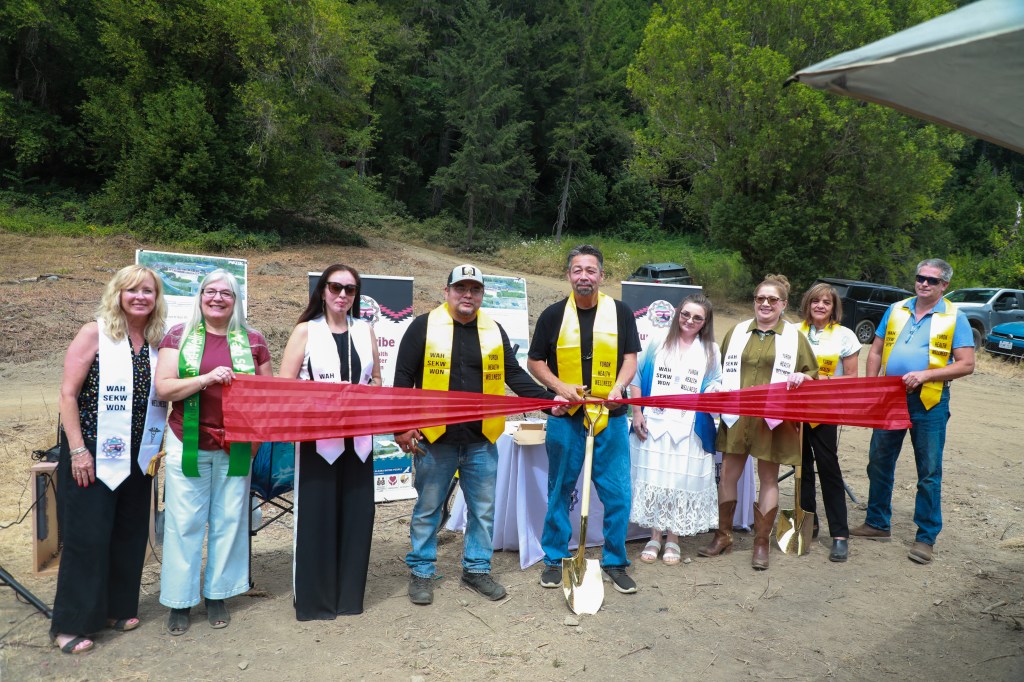
"Lub zej zog Yurok yuav sai sai no tau txais kev kho mob kev coj noj coj ua ze rau tsev thaum lawv xav tau tshaj plaws," Tus Thawj Coj ntawm Lub Tsev Haujlwm Saib Xyuas Kev Noj Qab Haus Huv (DHCS) Michelle Baass tau hais. "Yog tsis muaj lub chaw no, ntau tus neeg hauv zej zog thiab cov neeg hauv zej zog yuav tsum mus ncig deb ntawm lawv tsev neeg thiab kev txhawb nqa rau kev saib xyuas."
TXOG LUB CHAW KHO MOB WAH-SEKW-WON (YUROK HEALTH AND WELLNESS): Nyob ze Weitchpec, lub Chaw Kho Mob Wah-Sekw-Won uas muaj 26,000-square-foot yuav suav nrog:
LAWV HAIS LI CAS: "Kev tsim kho tshiab hnub no tsis yog qhov pib ntawm lub tsev xwb." Nws yog kev txuas ntxiv ntawm peb txoj kev cog lus rau kev kho mob, kev noj qab haus huv, thiab kev kav teb chaws, " Dr. Jacqueline Bae, Tus Thawj Coj ntawm Kev Pabcuam Kev Noj Qab Haus Huv, Yurok Tribe (Yurok Health and Wellness Center) tau hais. Lub Chaw Kho Mob Wah-Sekw-Won yuav muab kev saib xyuas raws li kab lis kev cai uas hwm lub zog, kev ua siab ntev, thiab kev lig kev cai ntawm cov neeg Yurok. Qhov kev nqis peev no yuav cawm tau txoj sia, txhawb zog tsev neeg, thiab txhawb nqa peb thaj av tag nrho rau ntau tiam neeg tom ntej.
"Peb tab tom npaj txhua yam ntawm qhov kev siv zog no los muab cov kev pabcuam kho mob zoo thiab muaj kab lis kev cai uas pab cov tib neeg rov qab sib npaug rau lawv lub neej," Tus Thawj Coj ntawm Yurok Tribe Joseph L. James tau hais. "Lub chaw no yuav muab ntau yam kev pabcuam txhawb nqa raws li ib feem ntawm kev nthuav dav, kev tswj hwm, thiab zej zog tsav tsheb kev noj qab haus huv."
"Kuv xav ua tsaug rau Tus Thawj Kav Xeev Gavin Newsom, Lub Chaw Haujlwm Saib Xyuas Kev Noj Qab Haus Huv thiab Tib Neeg ntawm California, thiab Lub Tsev Haujlwm Saib Xyuas Kev Noj Qab Haus Huv rau lawv txoj kev cog lus ruaj khov rau kev txhim kho kev nkag mus rau kev kho mob thiab cov txiaj ntsig hauv cov zej zog Tribe," Tus Lwm Thawj Coj ntawm Yurok Tribe, Rose Sylvia, tau hais.
"Peb txhawb nqa tag nrho Yurok Tribe lub zeem muag los tsim thiab ua haujlwm lub chaw pabcuam kev noj qab haus huv ntawm Tribal," Connie Beck, Tus Thawj Coj ntawm Humboldt County Department of Health and Human Services hais. Qhov project no yuav coj kev hloov pauv zoo thiab ruaj khov rau thaj av no.
VIM LI CAS QHOV NO TSEEM CEEB: Muaj ntau tshaj 1.2 lab tus neeg laus hauv California muaj mob hlwb loj heev, thiab 1 ntawm 10 tus neeg nyob hauv tsev neeg ua tau raws li cov qauv rau SUD. Qhov tsis muaj chaw kho mob tas li ua rau muaj kev tsis muaj tsev nyob thiab raug kaw hauv tsev loj cuj ntawm cov neeg uas muaj kev xav tau kev noj qab haus huv. Kev nqis peev xws li Wah-Sekw-Won Treatment Center (Yurok Health and Wellness) pab ua kom tiav cov qhov tsis txaus no. Qhov project no kuj tseem yuav txhawb nqa kev tsim haujlwm hauv zos los ntawm kev nthuav dav cov neeg ua haujlwm kev noj qab haus huv hauv cheeb tsam, pab txhawb rau kev ruaj ntseg hauv zej zog mus ntev.
DUAB LOJ: Qhov project no yog ib qho ntawm 177 qhov project thoob plaws lub xeev, tau txais nyiaj los ntawm Bond BHCIP cov peev txheej los txhawb nqa ob qho tib si kev xav tau tam sim ntawd thiab kev noj qab haus huv mus sij hawm ntev. Bond BHCIP yog tswj hwm los ntawm DHCS, pab cov zej zog tsim, tau txais, thiab nthuav dav cov chaw kho mob thaum muaj xwm txheej ceev, chaw nyob, thiab chaw kho mob sab nraud. Txog niaj hnub no, qhov kev pab cuam tau txhawb nqa 333 lub chaw, ntxiv 6,919 lub txaj pw tshiab thiab txaj pw hauv tsev kho mob thiab 27,561 qhov chaw kho mob sab nraud thoob plaws lub xeev, ua tiav cov hom phiaj thoob plaws lub xeev tsuas yog ob xyoos tom qab dhau mus. Txij li xyoo 2021 los, BHCIP tau muab $ 5.8 billion los txhawb kom muaj kev nkag mus rau kev kho mob tus cwj pwm.
Pawg Neeg Yurok kuj tau txais khoom plig los ntawm BHCIP Round 1: Kev Saib Xyuas Thaum Muaj Xwm Ceev thiab Chav Txawb ($200,000), BHCIP Round 2: Cov Nyiaj Pab Npaj ($150,000), yuav luag $8 lab los ntawm BHCIP Round 4: Cov Menyuam Yaus thiab Cov Hluas, thiab $12 lab los ntawm Bond BHCIP Round 2: Cov Kev Xav Tau Tsis Tau Raws Li Qhov Xav Tau los txhawb kom Pawg Neeg txoj kev noj qab haus huv zoo dua. Lub Chaw Hluas Yurok, uas tau pib ua haujlwm thaum Lub Plaub Hlis 2026, yuav tsim plaub lub chaw uas mob siab rau kev pabcuam kev noj qab haus huv rau cov menyuam yaus thiab cov hluas, nthuav dav peev xwm kev noj qab haus huv rau cov neeg mob sab nraud thiab nce kev nkag mus rau kev saib xyuas rau ntau txhiab tus tib neeg txhua xyoo.
Los ntawm kev koom tes zoo hauv zej zog, kev nqis peev thoob plaws lub xeev, thiab cov cai tshiab, California txuas ntxiv tsim kom muaj lub cev kev noj qab haus huv zoo thiab ncaj ncees uas ua kom tib neeg tuaj yeem nkag mus rau kev tiv thaiv, kev txhawb nqa thaum muaj xwm txheej ceev, kev kho mob, thiab kev rov zoo mus sij hawm ntev.
###
Office of Communications
(916) 440-7660
DHCSPress@dhcs.ca.gov
SACRAMENTO — Lub Tsev Haujlwm Saib Xyuas Kev Noj Qab Haus Huv (DHCS) hnub no tau tshaj tawm daim ntawv qhia txog kev tswj hwm kev saib xyuas zoo dua (ECM) thiab kev txhawb nqa hauv zej zog. Cov kev pabcuam no pab cov tswv cuab Medi-Cal kom noj qab haus huv zoo dua thiab zam lwm yam kev pabcuam kho mob kim dua, xws li kev mus ntsib chav kho mob thaum muaj xwm txheej ceev thiab kev nyob hauv tsev kho mob. Cov ntaub ntawv no txij lub Xya Hli mus txog rau lub Cuaj Hli 2025 (Q3 2025) thiab daim ntawv tshaj tawm tsis ntev los no qhia txog kev nthuav dav thiab kev cuam tshuam ntawm cov kev pabcuam no rau cov tswv cuab Medi-Cal.
"Kev loj hlob txuas ntxiv ntawm ECM thiab Kev Txhawb Nqa Hauv Zej Zog qhia txog lub zog ntawm peb txoj kev koom tes thoob plaws lub xeev thiab kev mob siab rau ntawm cov thawj coj saib xyuas kev saib xyuas, cov neeg muab kev pabcuam, thiab cov koom haum hauv zej zog uas tuaj rau Medi-Cal cov tswv cuab txhua hnub," Tus Thawj Coj DHCS Michelle Baass tau hais. "Cov kev pabcuam no txhawb kom muaj kev ruaj khov, kev hwm, thiab kev noj qab haus huv rau cov tswv cuab thoob plaws lub xeev."
COV NTSIAB LUS TSEEM CEEB LOS NTAWM DAIM NTAWV Q3 2025:
ECM muab kev tswj hwm kev saib xyuas qib siab tshaj plaws hauv California, koom tes nrog tus Thawj Coj Saib Xyuas Kev Saib Xyuas uas sib koom tes nrog kev pabcuam lub cev, kev coj cwj pwm, thiab kev sib raug zoo hauv zej zog los txhawb kev ruaj khov thiab txhim kho cov txiaj ntsig kev noj qab haus huv. Kev Txhawb Nqa Hauv Zej Zog yog cov kev pabcuam uas pheej yig, xaiv tau los ntawm cov phiaj xwm kev saib xyuas Medi-Cal uas daws cov kev xav tau kev noj qab haus huv, xws li kev tsis ruaj khov ntawm vaj tse, kev
zaub mov zoo, kev hloov pauv ntawm kev saib xyuas hauv tsev kho mob, thiab kev tswj hwm tus mob mus ntev
VIM LI CAS QHOV NO TSEEM CEEB: ECM thiab Kev Txhawb Nqa Hauv Zej Zog yog cov hauv paus tseem ceeb ntawm California txoj haujlwm los tsim kom muaj kev sib koom tes zoo dua, sib luag, thiab kev tiv thaiv kab mob. Cov kev pab cuam no pab cov tswv cuab uas muaj kev xav tau nyuaj txuas nrog kev txhawb nqa hauv zej zog uas ua rau kev noj qab haus huv ruaj khov thiab txo qhov xav tau kev saib xyuas ntau dua. Los ntawm kev hais txog kev tiv thaiv thiab kev saib xyuas tus kheej, ECM thiab Kev Txhawb Nqa Hauv Zej Zog txuas ntxiv txhim kho cov txiaj ntsig kev noj qab haus huv
cov tswv cuab Medi-Cal thoob
lub xeev.Cov phiaj xwm kev saib xyuas uas tau tswj hwm tau nthuav dav cov tes hauj lwm muab kev pabcuam ECM, ntxiv ntau tus neeg muab kev pabcuam rau cov neeg laus uas muaj feem yuav tau saib xyuas mus sij hawm ntev thiab cov menyuam yaus thiab cov hluas uas muaj kev xav tau siab tshaj plaws. DHCS txuas ntxiv txhawb kom cov phiaj xwm siv cov neeg muab kev pabcuam uas tau cog lus tag nrho thiab xyuas kom meej tias cov kev pabcuam tau muab rau ntawm qib kev siv zog tsim nyog.
KEV SIV NYIAJ THIAB KEV CUAM TSHUAM MUS TXOG LUB SIJ HAWM NTEV: Cov ntaub ntawv los ntawm DHCS daim ntawv qhia txhua xyoo tshiab In Lieu of Services (ILOS) qhia tias Kev Txhawb Nqa Hauv Zej Zog pab cov tswv cuab zam kev kho mob kim dua. Daim ntawv tshaj tawm no kawm txog cov nqi kev pabcuam thiab kev siv ua ntej thiab tom qab cov tswv cuab tau txais tsawg kawg yog ib qho ntawm 12 Kev Txhawb Nqa Hauv Zej Zog uas tau tso cai ua ILOS ntawm Lub Ib Hlis 2023 thiab Lub Rau Hli 2024. Kaum ntawm 12 Qhov Kev Txhawb Nqa Hauv Zej Zog uas tau kawm twb tau qhia txog kev siv nyiaj tsim nyog thoob plaws hauv cov kev pabcuam Medicaid State Plan, xws li kev mus ntsib chav kho mob ceev, kev nyob hauv tsev kho mob, thiab kev nyob hauv tsev laus. Cov ntsiab lus tseem ceeb suav nrog:
Cov txiaj ntsig thaum ntxov qhia txog qhov muaj nqis mus sij hawm ntev, qhia tau tias kev nqis peev rau cov kev pabcuam uas daws cov teeb meem kev noj qab haus huv hauv zej zog tsis yog tsuas yog txhim kho kev noj qab haus huv ntawm cov tswv cuab xwb, tab sis kuj txo cov nqi thoob plaws Medi-Cal txoj kev xa khoom. Yog xav paub ntxiv, mus saib daim ntawv qhia no.
ECM THIAB KEV TXHAWB TXOG ZEJKHUAM NYOB NTAWM NO: ECM yog ib qho kev pabcuam kho mob Medi-Cal thoob plaws lub xeev rau cov tswv cuab uas muaj kev xav tau nyuaj tshaj plaws. Kev Txhawb Nqa Hauv Zej Zog kuj yog ib qho kev xaiv rau cov kev pab cuam Medicaid hauv xeev, feem ntau yog raws li tsoomfwv cov cai tswjfwm kev saib xyuas Medicaid thiab nco txog cov ntawv cog lus kev saib xyuas uas tau pom zoo. Vim tias cov kev pabcuam no tau tsim los rau hauv cov qauv tseem ceeb ntawm Medi-Cal managed care—tsis yog cov kev sim ib ntus—DHCS yuav txuas ntxiv saib xyuas kev siv, nthuav dav cov tes hauj lwm muab kev pabcuam, thiab txhawb nqa kev ruaj khov ntawm cov kev pabcuam mus sij hawm ntev.
Qhov kev ruaj khov no ua kom cov tswv cuab, cov thawj coj saib xyuas kev saib xyuas, cov neeg muab kev pab, thiab cov neeg koom tes hauv zej zog tuaj yeem txuas ntxiv nqis peev rau hauv kev sib raug zoo thiab cov qauv kev saib xyuas uas ua rau ECM thiab Kev Txhawb Nqa Hauv Zej Zog ua haujlwm tau zoo. Nws kuj lav qhov kev sib koom tes saib xyuas neeg mob hnyav, kev txhawb nqa vaj tse thiab kev noj haus, kev pabcuam kev noj qab haus huv, thiab lwm yam kev pabcuam tseem ceeb uas ntau pua txhiab tus neeg California vam khom.
###
Office of Communications
(916) 440-7660
DHCSPress@dhcs.ca.gov
SACRAMENTO — Lub Chaw Pabcuam Medicare & Medicaid (CMS) hauv tsoomfwv tau ua ib kauj ruam tshwj xeeb los ntawm kev ncua $ 1.1 billion hauv tsoomfwv cov nyiaj pab uas khi rau California txoj haujlwm Pabcuam Txhawb Nqa Hauv Tsev (IHSS).
Qhov kev nqis tes ua no xa ib tsab xov xwm tsis zoo txog qhov tseem ceeb uas CMS muab rau cov haujlwm tseem ceeb uas cov neeg saib xyuas IHSS ua txhua hnub thiab tsim kev nyuaj siab rau California, vim tias Lub Xeev tseem niaj hnub ua kom muaj kev saib xyuas tsis tu ncua rau ntau dua 900,000 tus neeg laus, cov neeg xiam oob qhab, thiab cov menyuam yaus uas vam khom IHSS kom nyob nyab xeeb hauv tsev.
IHSS yog ib qho kev pab cuam hauv tsev thiab hauv zej zog (HCBS) uas tau txais kev pom zoo los ntawm tsoomfwv thiab yog lub hauv paus ntawm California txoj kev siv zog ntev los ua kom tib neeg muaj kev nyab xeeb hauv tsev thiab tawm ntawm cov chaw kho mob kim heev, ib txoj hauv kev uas CMS tau txhawb nqa tas li rau ntau xyoo lawm. California tau tsim ib qho ntawm lub tebchaws cov txheej txheem HCBS muaj zog tshaj plaws, nthuav dav kev nkag mus rau cov kev pabcuam hauv tsev raws li txoj cai tswjfwm tebchaws thiab Txoj Cai Lij Choj Amelikas uas muaj Kev Tsis Taus txoj cai los txhawb cov tib neeg hauv qhov chaw sib koom ua ke zoo tshaj plaws.
"CMS tau siv qhov uas ib zaug yog cov txheej txheem kev sib haum xeeb them nyiaj nrog cov xeev los rhuav tshem qhov uas tsoomfwv txoj cai HCBS tau nrhiav ntev los ua tiav: pab ntau tus neeg nyob hauv tsev kom muaj kev nyab xeeb, es tsis txhob nkag mus rau hauv cov tsev kho mob rau kev saib xyuas mus sij hawm ntev," Tus Thawj Coj Medicaid ntawm Xeev Tyler Sadwith tau hais.
CMS nug tias vim li cas cov nuj nqis ntawm IHSS thiaj li loj hlob tuaj rau xyoo tas los no. California tam sim ntawd piav qhia tias muaj peb yam tseem ceeb uas ua rau cov nqi ntawm IHSS cov kev pab cuam nce ntxiv:
Cov neeg mob IHSS uas tsim nyog tau txais kev pab nyiaj txiag los ntawm tsoomfwv tebchaws Medi-Cal tau nce ntxiv los ntawm 613,764 hauv Xeev Xyoo Nyiaj Txiag (SFY) 2022-23 mus rau 720,988 hauv SFY 2024-25, uas yog nce 17.5 feem pua. Tus nqi nruab nrab ib teev tau nce ntawm $19.00 mus rau $21.03 hauv tib lub sijhawm, uas sawv cev rau kev nce 10.7 feem pua uas tsav los ntawm kev nce nqi zog tsawg kawg nkaus thoob plaws lub xeev thiab cov nqi zog sib tham hauv nroog. Kev nce nyiaj hli yog ib qho cuab yeej los nrhiav thiab khaws cov neeg ua haujlwm tsim nyog hauv ib qho chaw uas muaj kev tsis txaus cov neeg muab kev pabcuam. Thaum kawg, qhov nruab nrab teev rau ib rooj plaub tau nce me ntsis hauv tib lub sijhawm vim yog qhov xav tau kev pab ntau dua ntawm cov tib neeg tau txais kev pabcuam hauv qhov kev pab cuam.
"Kev loj hlob ntawm cov nuj nqis IHSS dhau ob peb xyoos dhau los qhia txog kev xaiv txoj cai kom nthuav kev nkag mus rau IHSS," Sadwith ntxiv. "Nws yog qhov tshwm sim ncaj qha thiab pom tau los ntawm kev nthuav dav txoj cai, nce tus nqi them rov qab txhua teev, nce kev siv raws li kev hloov pauv ntawm cov pej xeem, thiab hloov kev saib xyuas hauv tsev rau kev tso chaw rau cov tsev kho mob - cov txiaj ntsig uas CMS tau pom zoo thiab txhawb nqa ntau zaus los ntawm kev pom zoo los ntawm tsoomfwv California cov kev pab cuam IHSS thiab HCBS vim tias lawv muab kev saib xyuas ntawm ib feem ntawm cov nqi tsev kho mob."
Txawm hais tias cov hom phiaj txoj cai tswjfwm ntawm tsoomfwv tebchaws uas tau muaj ntev los lawm thiab kev pom zoo ntawm tsoomfwv tebchaws rau kev loj hlob ntawm IHSS qhov kev pab cuam, CMS daim ntawv ceeb toom ncua sijhawm hais tias CMS tab tom ncua cov nyiaj no vim tias qhov kev loj hlob ntawm California qhov kev pab cuam IHSS ntau dua li lwm lub xeev.
Ntxiv rau qhov ntawd, tsab ntawv ntawm CMS hais txog kev txhawj xeeb txog kev ncaj ncees ntawm qhov kev pab cuam, tab sis tsis muab cov lus qhia meej txog cov kev txhawj xeeb no yog dab tsi tsuas yog "cov lej tsis zoo." Kev ncaj ncees ntawm txoj haujlwm yog lub luag haujlwm tseem ceeb ntawm Medi-Cal uas tsom mus rau kev ua kom cov nyiaj pej xeem raug siv raws li txoj cai los ntawm kev saib xyuas dav dav, kev tiv thaiv kev dag ntxias, thiab kev siv zog los ua kom muaj kev nyab xeeb. California tswj hwm cov txheej txheem saib xyuas IHSS uas muaj zog thiab siv tau ntev, suav nrog kev ntsuam xyuas txhua xyoo, cov ntawv teev sijhawm ua haujlwm hauv hluav taws xob, cov cuab yeej txheeb xyuas, thiab cov txheej txheem tshuaj xyuas sib koom tes ntawm lub xeev thiab lub nroog.
Cov neeg saib xyuas IHSS pab tib neeg sawv ntawm txaj, npaj zaub mov, da dej kom muaj kev nyab xeeb, thiab nyob hauv lawv lub tsev nrog kev hwm. Peb ua tsaug rau txoj haujlwm uas lawv ua txhua hnub, "Sadwith ntxiv. "CMS qhov kev txiav txim siab tsis quav ntsej cov neeg uas vam khom IHSS thiab cov tib neeg uas saib xyuas lawv txhua hnub."
Ntxiv rau qhov kev ncua sij hawm ntsig txog IHSS, CMS kuj suav nrog kwv yees li $ 200 lab uas cuam tshuam nrog cov khoom thov kev tswj hwm thiab kev siv tshuab uas lub xeev twb tau ua haujlwm nrog CMS lawm. Cov khoom no yog qhov xav tau, tsis muaj feem cuam tshuam nrog cov kev pabcuam IHSS lossis cov nyiaj them rau tus neeg saib xyuas, thiab yog ib feem ntawm cov txheej txheem tshuaj xyuas tsoomfwv uas tseem tab tom ua. DHCS tau ua haujlwm pub dawb los txo 15 feem pua ntawm cov kev thov nyiaj pabcuam kev tswjfwm pib thaum ntxov xyoo 2025 ua ib feem ntawm kev tshuaj xyuas kom meej tias cov nyiaj txiag hauv tsoomfwv tsis raug siv rau cov kev pabcuam hauv xeev xwb. Cov kev thov kev tswj hwm no yog cuam tshuam nrog kev tswj hwm qhov kev pab cuam thiab cov nqi khiav lag luam ntawm lub koom haum, tsis yog kev kho mob. DHCS tau xa cov ntaub ntawv tiav rau CMS uas qhia txog kev ua raws li cov txheej txheem thov thiab tau hloov kho peb qhov kev txo qis kom suav nrog qhov kev tshuaj xyuas no. DHCS txuas ntxiv ua haujlwm nrog CMS los muab kev txhawb nqa rau cov kev hloov kho tshiab no.
California hu rau CMS kom rov qab muab cov nyiaj IHSS rov qab tam sim ntawd thiab yuav ua txhua yam uas tsim nyog los tiv thaiv cov tswv cuab IHSS thiab cov neeg saib xyuas uas txhawb nqa lawv.
###
Office of Communications
(916) 440-7660
DHCSPress@dhcs.ca.gov