
提案 1 資料表
行為健康轉變
這份文件代表了California Department of Health Care Services在實施第 1 號提案(也稱為「行為健康轉型」)方面的工作,該提案是紐森州長「全民心理健康計畫」的關鍵組成部分。 有關其他機構貢獻的更多信息,可訪問California退伍軍人事務部和California住房和社區發展部 (HCD) 查詢。
問題

加利福尼亞州有超過 1,2 萬名成年患有嚴重的心理疾病,而 13 個孩子中有 1 名患有嚴重的情緒障礙。[1]
行為健康治療場所短缺導致患有精神健康障礙人士的無家可歸和監禁危機的日益增加。[4]
解決方案:提案 1
California正在對其整個精神健康和藥物濫用系統進行改革。 為了推進這項工作, California選民在 2024 年 3 月通過了第 1 號提案,其中包括《行為健康服務法案》(參議院第 326 號法案(Eggman,2023 年法令第 790 章))和 64 億美元的行為健康債券(眾議院第 531 號法案(Irwin,2023 年 64 億美元的行為健康債券(眾議院第 531 號法案(Irwin,2023 年)以 2023 年對加州來濫用心理需求,以 最嚴重的方式濫用心理需求,人們有嚴重的藥物和藥物)。 DHCS 將這些變革的實施稱為行為健康轉型。
第 1 部分:行為健康服務法
《行為健康服務法》更新了 2004 年的《精神健康服務法》,增加了所有加州居民獲得支持的機會,確保人們能夠在需要的時候在自己的社區獲得所需的幫助。
行為健康服務法案的關鍵要素:
- 改革行為健康照護資金,將治療、住房介入和行為健康勞動力支持納入患有藥物濫用障礙的個人中,同時繼續優先為有最嚴重行為健康需求的人提供服務。
- 擴大服務範圍,以促進California多元化人口的預防、早期介入和治療,並投資於創新試點Program 。
- 注重結果、問責和公平。
優先人口:
行為健康服務法案的資金和計劃將針對具有一系列行為健康需求的人,包括 SUD。 行為健康轉型認識到 SUD,心理健康狀況和無家可歸是相互聯的,必須一起解決以達到最佳結果。
《行為健康服務法案》也惠及那些受心理健康和藥物濫用問題影響尤為嚴重、且可能存在更多未滿足需求的重點人口。《行為健康服務法案》的優先服務族群包括:
符合條件的成年人:
- 長期無家可歸、無家可歸或有無家可歸的風險
- 在司法系統中或有風險進入司法系統
- 從監獄或監獄重新進入他們的社區
- 根據提案 1 進行保守的風險
- 有機構化風險
符合條件的兒童及青少年:
- 長期無家可歸、無家可歸或有無家可歸的風險
- 在青少年司法系統中或有風險進入青少年司法系統
- 從青少年懲教設施重新進入社區
- 在根據提案 1 的兒童福利制度
- 有機構化風險
行為健康服務法案資助分配:
《行為健康服務法案》對資金的使用進行了現代化改革,旨在為加州有最嚴重行為健康需求的居民提供服務。 [5]
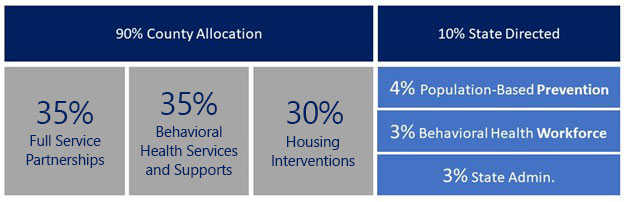
- 35% 行為健康服務和支援:包括早期介入;外展和參與;勞動力;教育和培訓;資本設施和技術需求;以及創新試點和計畫。
- 該金額的大部分(51%)必須用於治療精神疾病或 SUD 的早期跡象。
- 大部分(51%)的早期干預服務和支持必須為 25 歲或以下人士提供。
- 35% 全方位服務夥伴關係:為任何年齡層有最複雜需求的人提供全面且深入的照護(也稱為「不惜一切代價」模式)。
- 30% 住房:幹預措施包括租金補貼、營運補貼、合租住房、符合條件的兒童和青少年的家庭住房,以及某些過渡性租金的非聯邦份額。
- 這一半(50%)優先用於長期無家可歸者的住房干預。
- 最多可用於資本發展 25%。
- 一些豁免可能適用於小縣。
各縣將在上述資助領域中有彈性,可以從一個類別移至另一個類別的高達 7%,最多可達 14%。 這使縣能夠根據數據和社區輸入來解決其不同的當地需求和優先事項。
SUD 治療:
對藥物濫用治療服務的需求不斷增加,而且通常與精神健康狀況密切相關。擴大資格範圍,將藥物濫用障礙納入其中,有助於解決未滿足的需求。《行為健康服務法》允許各縣單獨或與其他州和聯邦資金相結合,為這些服務提供資金,以支持擴大藥物濫用治療服務。各縣必須利用數據,在精神健康和藥物濫用治療服務之間合理分配資金,並制定策略來解決兩者之間的差距。
早期干預:
《行為健康服務法》持續阻斷潛在疾病的進程。DHCS與行為健康服務監督和問責委員會、各縣和利益相關者協商後,正在製定一份兩年一次的早期幹預Program循證實踐和社區定義的循證實踐清單。 各縣必須將大部分(51%)行為健康服務和支持資金用於早期介入服務,以幫助發現精神疾病或藥物濫用的早期跡象。這些服務和支援大多面向 25 歲及以下的個人。
健康公平:
行為健康服務法案支持文化響應的服務,以改善健康並減少所有人的健康差異:
- 減少規劃和服務交付的孤島,並設定明確的原則。
- 需要分層數據和策略,以減少規劃、服務和結果方面的健康差異。
- 明確推進社區定義的實踐,作為減少健康差異和增加社區代表性的關鍵策略。
責任:
各縣須提交行為健康服務和結果的綜合計劃草案和最終計劃,以及行為健康結果、問責制和透明度報告。這些計劃和報告將透過健康公平的角度納入數據,以識別種族、民族、年齡、性別和其他人口統計差異,並為減少差異的工作提供資訊。
| 要求 | 縣級行為健康服務與成果綜合計畫草案及最終版 | 縣行為健康成果,問責和透明度報告 |
|---|---|---|
| 提交頻率 | 每三年一次 | 每年 |
| 內容 | 必須包括所有當地,州和聯邦行為健康資金和服務,預算,與目標和結果衡量以及勞動力策略。 必須通過利益相關者的意見,人口需求評估和當地衛生司法管轄區合作的通知。 | 必須包括所有本地、州和聯邦行為健康資金的支出、未花費的金額、服務使用率數據和結果,並具有健康公平視角、勞動力指標和其他資訊。 |
| DHCS 的角色 | DHCS 將在與各縣和利益相關者諮詢下制定績效結果。 | DHCS 獲授權對未滿足某些要求的縣施行糾正行動計劃。 |
California衛生與公共服務局和DHCS將召集行為健康服務法案收入穩定工作小組,評估行為健康服務法案產生的稅收收入波動,以支持短期和長期的財政穩定。 工作小組將提出減少收入波動性的解決方案,並提出縣級Program和服務永續發展所需的儲備水準。
第 2 部分:行為健康關係
行為健康債券由 64 億美元的一般義務債券組成,包括兩個部分:
» 44 億美元用於治療場所,以成功的行為健康連續體基礎設施Program (BHCIP) 為藍本。 資金將用於建設:
- 6800張行為健康治療床位和26700個行為健康門診治療名額。
- 撥款 44 億美元用於行為健康治療機構,其中 15 億美元將授予縣市, 3,000 萬美元將保留給部落社區。
- 一項價值19.72 億美元的支持性住房債券,將由HCD管理,以 HomeKey 為藍本。資金將用於為極低收入和有行為健康問題、正在經歷或面臨無家可歸風險的人們提供住房。
- 4,350 個永久支持住房單位,其中 2,350 個為退伍軍人設置。
- 為有行為健康需求的、正在經歷或面臨無家可歸風險的退伍軍人提供 10.65 億美元的住房投資。這些資金將與加州退伍軍人事務部 (CalVet)合作管理。
- 為有行為健康問題且面臨無家可歸風險的人提供9.22 億美元的住房投資。
剩餘的20 億美元將用於永久性支持住房,其模式效仿 HomeKey,其中一半專門用於退伍軍人,由商業、消費者服務和住房機構 (BCSHA) 和CalVet管理。利害關係人和資金機會都存在。
利害關係人參與
DHCS 將提供多個利益相關者參與機會,包括每月的公眾聆聽會議,以收集對與行為健康轉型有關制定政策和指導的意見。
- 每月公眾聆聽會對所有人開放。
- 在制定行為健康轉型政策時,DHCS 將分析並考慮在這些會議期間收到的反饋。 會議和註冊信息將在利害關係人參與網頁上共享,以及先前會議的記錄。
預期行為健康轉型里程碑
以下是幾個 DHCS 里程碑的高級時間範圍。 有關時間表和政策的其他更新將在整個項目中共享。
- 2024 年春季開始
- 利害關係人的參與,包括公眾聆聽會議,將在所有里程碑中使用,以提供政策制定信息。
- 2024 年夏季開始
- 債券 BHCIP:第一輪發布即時申請申請,高達 3.3 億美元的資金將利用 BHCIP 和 HomeKey 模型。
- 二零二五年初開始
- 縣行為健康服務和結果綜合計劃政策和指導將分階段發布,從綜合計劃的政策和指導開始。
- 自2026年春季起:各縣向DHCS提交綜合規劃草案,並需經縣行政官員(CAO)批准。
- 二零二六年夏季
- County Integrated Plans for Behavioral Health Services and Outcomes, fiscal transparency, and data reporting requirements go live in July 2026 (for the next three-year cycle).
無法檢索內容連結屬性中指定的 URL。 如需更多協助,請聯絡您的網站管理員。
- California的心理健康。
- 邁向新的理解: California全州無家可歸者調查。
CASPEH_Report_62023.pdf (ucsf.edu) - California的藥物濫用問題。
2022 年版— California藥物濫用問題— California醫療保健基金會 (chcf.org) - 行為健康轉型。
- 註:各縣可靈活調整各領域的撥款金額。
行為健康服務法案情況說明書。