
Quality Care Initiatives
Cải thiện kết quả sức khỏe cho các thành viên Medi-Cal
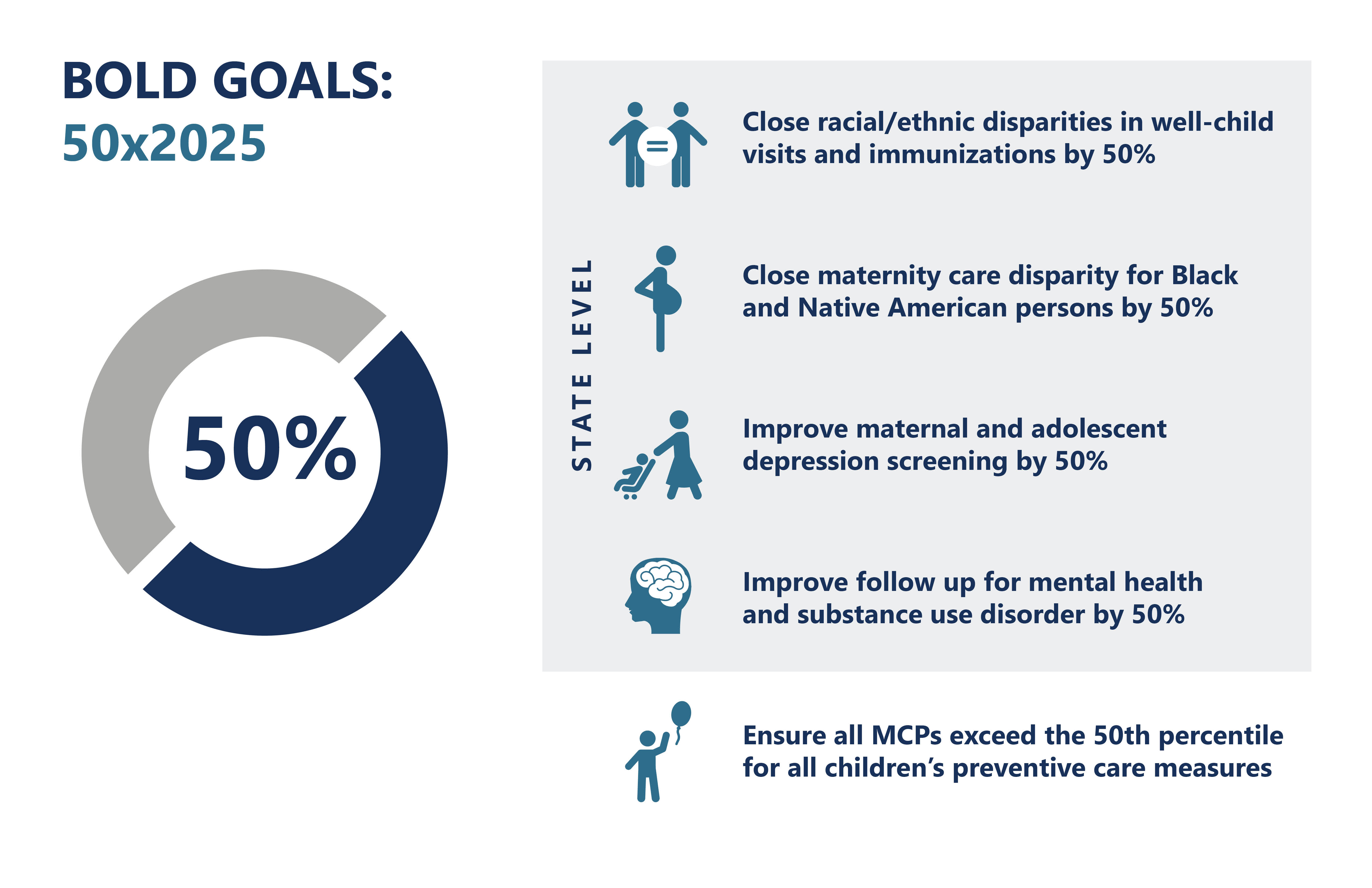
The California Department of Health Care Services (DHCS) is committed to achieving excellence in the quality and equity of care for Medi-Cal members. Through broader efforts focused on Medi-Cal Transformation, as well as through the ambitious 2022 Comprehensive Quality Strategy, DHCS outlined a Population Health Management approach grounded in high-quality primary care as well as the 50×2025 Bold Goals Initiative to improve health care outcomes for children’s preventive health, maternity care and birth equity, and behavioral health integration.
Tập trung tiếng nói của thành viên
Yếu tố cốt lõi trong tầm nhìn của DHCS về chất lượng và sự công bằng trong chăm sóc sức khỏe là niềm tin rằng các thành viên Medi-Cal là trọng tâm trong việc thiết kế chính sách và các chương trình của chúng tôi.
Lộ trình Bình đẳng Y tế: Lộ trình Bình đẳng Y tế vạch ra kế hoạch của DHCS nhằm giảm thiểu sự bất bình đẳng về y tế bằng cách thu thập dữ liệu, xác định những thiếu sót trong chăm sóc sức khỏe và tạo ra các biện pháp can thiệp mục tiêu cho các nhóm có nguy cơ cao. Một chuyến khảo sát lắng nghe ý kiến trên toàn tiểu bang đã thu thập phản hồi trực tiếp từ các cộng đồng đang phải đối mặt với sự bất bình đẳng để giúp định hình lộ trình này, vốn hướng đến việc xây dựng tính minh bạch và lòng tin giữa các thành viên đa dạng.
Ủy ban cố vấn thành viên Năm 2023 , DHCS đã thành lập Ủy ban Tư vấn Thành viên Medi-Cal (MMAC), một diễn đàn chuyên biệt dành cho các thành viên Medi-Cal để cung cấp phản hồi trực tiếp cho Giám đốc và ban lãnh đạo cấp cao của DHCS. Ủy ban này hoàn toàn bao gồm các thành viên của chương trình Medi-Cal và người chăm sóc gia đình, đảm bảo rằng nhiều quan điểm đa dạng được đại diện.
Cải thiện tính minh bạch và trách nhiệm giải trình về chất lượng
Đo lường chất lượng trong chăm sóc sức khỏe tâm thần: Trong khi DHCS từ lâu đã theo dõi hiệu quả chất lượng của các chương trình chăm sóc quản lý Medi-Cal (MCP), bắt đầu từ năm 2022, DHCS cũng đã thiết lập Bộ tiêu chuẩn trách nhiệm về sức khỏe tâm thần (BHAS) để đo lường kết quả chất lượng lâm sàng trong các chương trình chăm sóc sức khỏe tâm thần cấp quận.
Cải thiện tính minh bạch: Trong ba năm qua, DHCS đã tăng đáng kể lượng báo cáo công khai về chất lượng và kết quả công bằng trên khắp các hệ thống và sáng kiến cung cấp dịch vụ để cải thiện tính minh bạch và trao quyền cho các đối tác sử dụng dữ liệu để thúc đẩy cải tiến. Điều này bao gồm nhưng không giới hạn ở:
- Bảng điều khiển CalAIM
- Báo cáo hàng quý về Quản lý chăm sóc nâng cao/Hỗ trợ cộng đồng
- Bộ tài liệu về trách nhiệm giải trình chăm sóc được quản lý
- Bộ tài liệu về trách nhiệm giải trình sức khỏe hành vi
Chế tài và trách nhiệm giải trình: Các nhà cung cấp dịch vụ chăm sóc sức khỏe (MCP) không đáp ứng tiêu chuẩn chất lượng có thể phải đối mặt với kế hoạch hành động khắc phục, phạt tiền hoặc thậm chí chấm dứt hợp đồng trong trường hợp nghiêm trọng. Các biện pháp trừng phạt đảm bảo các kế hoạch ưu tiên chăm sóc chất lượng và cải thiện việc cung cấp dịch vụ khi cần thiết. Trong ba năm qua, DHCS đã tăng cường chính sách xử phạt chất lượng đối với cả MCP và Kế hoạch Sức khỏe Tâm thần (BHP). Ngoài ra, DHCS đã áp dụng các biện pháp trừng phạt tài chính vào năm 2022, 2023 và 2024 đối với các chương trình chăm sóc trẻ em (MCP) không đáp ứng mục tiêu về chất lượng kết quả do DHCS đề ra (xếp hạng 50% quốc gia).
Hỗ trợ cải thiện chất lượng: DHCS đã hợp tác với các MCP trong một số nỗ lực cải thiện chất lượng để nâng cao chất lượng chăm sóc cho các thành viên Medi-Cal, bao gồm:
- Tham gia Chương trình hợp tác học tập về chương trình khám sức khỏe trẻ sơ sinh và trẻ nhỏ của Trung tâm dịch vụ Medicare & Medicaid (CMS).
- Tạo ra các nhóm cộng tác khu vực mới cho tất cả MCP để thảo luận về các rào cản, sự chênh lệch trong khu vực và các đối tác cộng đồng tiềm năng.
- Tổ chức Hội nghị về Chất lượng và Công bằng Y tế của DHCS vào năm 2023 như một diễn đàn để lập kế hoạch chia sẻ và kết nối các chiến lược thành công trong việc cải thiện chất lượng và công bằng.
- Launching two new statewide learning collaboratives in 2024, one focused on improving and scaling children’s preventive services and the other focused on behavioral health integration and improved collaboration between MCPs and county behavioral health plans.
Các ưu đãi tài chính để thúc đẩy chất lượng và công bằng
Chương trình Giữ lại và Khuyến khích Chất lượng: Năm 2024, DHCS đã triển khai chương trình Giữ lại và Khuyến khích Chất lượng (QWI) . Chương trình này khuyến khích các nhà cung cấp dịch vụ chăm sóc sức khỏe (MCP) cải thiện hiệu suất dựa trên các chỉ số chất lượng phù hợp với Chiến lược Chất lượng Toàn diện và Mục tiêu Tham vọng của DHCS bằng cách giữ lại 0,5% khoản thanh toán trọn gói, khoản này có thể được hoàn trả nếu đáp ứng các mục tiêu về chất lượng, sự hài lòng của bệnh nhân và hiệu quả.
Chương trình khuyến khích tự động chọn MCP: Chương trình này thưởng cho các MCP hoạt động hiệu quả hơn ở một số quận nhất định (có nhiều hơn một MCP) bằng tỷ lệ thành viên Medi-Cal mới cao hơn (những người không chủ động chọn MCP). Vào năm 2024, DHCS đã sửa đổi Chương trình Phân công Tự động lâu năm này để tập trung hoàn toàn vào hiệu suất của MCP trên các chỉ số chất lượng được lựa chọn, phù hợp với Chiến lược Chất lượng Toàn diện và các Mục tiêu Tham vọng của mình.
Chi tiêu cho chăm sóc sức khỏe ban đầu và các mô hình thanh toán thay thế: Bắt đầu từ năm 2024, tất cả các chương trình chăm sóc sức khỏe trọn gói (MCP) đều phải báo cáo với DHCS về tỷ lệ phần trăm chi tiêu dành cho chăm sóc sức khỏe ban đầu và cách họ sử dụng các mô hình thanh toán thay thế với các nhà cung cấp dịch vụ để khuyến khích chất lượng và sự công bằng. DHCS đã hợp tác với các đối tác quan trọng của tiểu bang, bao gồm Covered California và CalPERS, để thống nhất các yêu cầu hợp đồng này giữa các đơn vị mua sắm công.
Equity and Practice Transformation Payments: In 2024, DHCS launched the Equity and Practice Transformation Payment Program, a $140 million investment in primary care practices to advance health equity and reduce disparities by working on upstream care models, improving quality of care, value-based payment models, and practice transformation.
Đầu tư vào cộng đồng
Tái đầu tư cộng đồng MCP: Bắt đầu từ năm 2024, tất cả MCP có lợi nhuận đều phải tái đầu tư 7,5-15% lợi nhuận đó vào các hoạt động tái đầu tư cộng đồng được thông báo và hướng dẫn dựa trên nhu cầu của cộng đồng địa phương.
California Advancing and Innovating Medi-Cal (CalAIM): CalAIM Chương trình này hướng đến việc cải thiện chất lượng chăm sóc cho các thành viên Medi-Cal thông qua các dịch vụ Quản lý Chăm sóc Nâng cao và Hỗ trợ Cộng đồng , như hướng dẫn tìm nhà ở, bữa ăn phù hợp với y tế và nhà ở phục hồi chức năng, như những lựa chọn thay thế cho các dịch vụ y tế truyền thống.
Dịch vụ sức khỏe tâm thần: DHCS đã tăng đáng kể đầu tư để mở rộng dịch vụ khám chữa bệnh từ xa, tích hợp sức khỏe tâm thần với chăm sóc sức khỏe ban đầu và hỗ trợ Chương trình Cơ sở hạ tầng liên tục về sức khỏe tâm thần (BHCIP). Xây dựng các cơ sở điều trị và cộng đồng mới.
- Các sáng kiến BH-CONNECT và Chuyển đổi Sức khỏe Hành vi đang tăng cường khả năng tiếp cận dịch vụ chăm sóc bằng cách cung cấp các dịch vụ tiếp cận, điều hướng và tham gia phối hợp cho các cá nhân cần hỗ trợ sức khỏe hành vi.