
Quality Care Initiatives
改善醫療成員的健康成果
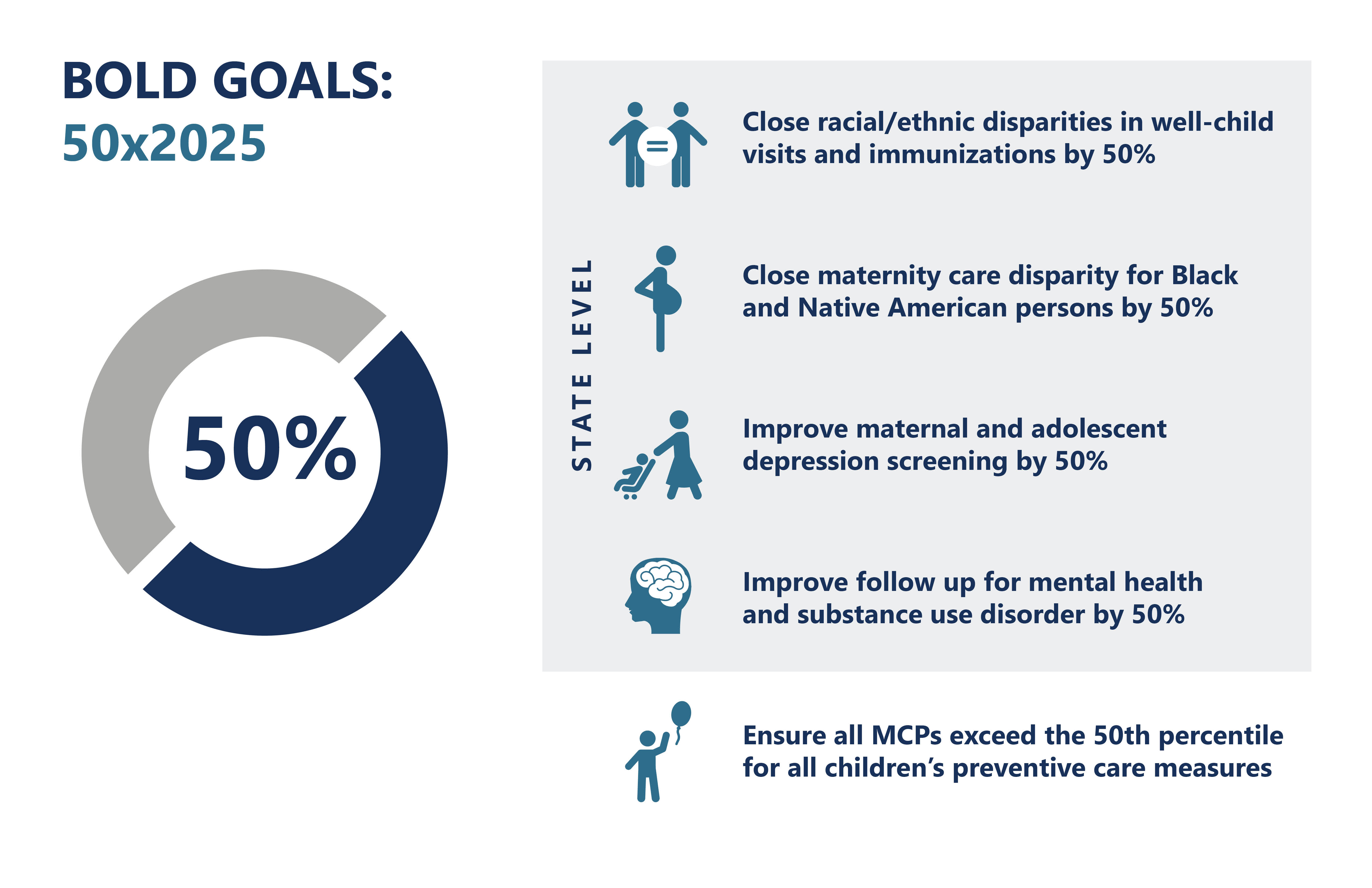
The California Department of Health Care Services (DHCS) is committed to achieving excellence in the quality and equity of care for Medi-Cal members. Through broader efforts focused on Medi-Cal Transformation, as well as through the ambitious 2022 Comprehensive Quality Strategy, DHCS outlined a Population Health Management approach grounded in high-quality primary care as well as the 50×2025 Bold Goals Initiative to improve health care outcomes for children’s preventive health, maternity care and birth equity, and behavioral health integration.
集中成員聲音
DHCS實現高品質和健康公平願景的核心是相信Medi-Cal會員是我們政策設計和Program的核心。
健康公平路線圖:健康公平路線圖概述了DHCS透過收集數據、確定護理差距以及為高風險群體制定有針對性的干預措施來減少健康差距的計劃。一項全州範圍的傾聽之旅直接從存在差異的社區收集成員回饋,以幫助制定該路線圖,該路線圖旨在建立不同成員之間的透明度和信任。
成員諮詢委員會 2023年,DHCS 成立了Medi-Cal 會員諮詢委員會 (MMAC) ,這是一個專門為 Medi-Cal 會員設立的論壇,旨在向 DHCS 主任和執行領導層提供直接回饋。該委員會完全由 Medi-Cal 會員和家庭護理人員組成,確保代表各種不同的觀點。
提高品質的透明度和責任
行為健康品質衡量:雖然DHCS長期以來一直在追蹤Medi-Cal Managed Care計劃 (MCP) 的品質績效,但從 2022 年開始, DHCS也建立了行為健康問責制 (BHAS),以衡量縣行為Health Plan的臨床品質結果。
提高透明度:在過去三年中,DHCS 大幅增加了跨交付系統和計劃的質量和公平成果的公開報告數量,以提供更高的透明度,並使合作夥伴能夠使用數據來推動改進。 這包括但不限於:
制裁與問責:未能達到品質標準的醫療服務提供者可能會面臨整改計畫、經濟處罰,嚴重情況甚至可能被終止合約。制裁措施確保各項計劃優先考慮高品質的醫療服務,並在必要時改善服務提供。在過去的三年裡, DHCS加強了對MCP和行為Health Plan (BHP) 的品質制裁政策。 此外,DHCS在2022年、2023年和2024年對未能達到DHCS品質結果目標(全國第50百分位)的醫療照護計畫
MCP
處以了經濟處罰。支援品質改善:DHCS 與 MCP 合作進行了多項品質改善工作,以提升 Medi-Cal 會員的醫療服務質量,其中包括:
- 參與醫療保險中心 & 醫療補助服務(CMS)嬰兒健康兒童訪問學習協作。
- 為所有 MCP 創建新的區域合作夥伴,以討論區域障礙,差異和潛在的社區合作夥伴。
- 於 2023 年主辦 DHCS 品質與健康公平會議,作為計劃分享和網路品質和公平改進成功策略的論壇。
- 2024 年啟動了兩項新的全州學習合作項目,一項側重於改善和擴大兒童預防服務,另一項側重於行為健康整合以及 MCP 與縣行為Health Plan之間的改進合作。
推動優質 & 股票的財務激勵措施
品質扣繳和激勵Program :2024 年, DHCS實施了品質扣繳和激勵 (QWI) Program 。 該Program透過扣留 0.5% 的按人頭付費來激勵 MCP 提高與DHCS綜合品質策略和宏偉目標相一致的品質指標的績效,而這些扣留款項可以透過達到品質、患者滿意度和效率的績效目標來贏回。
自動分配激勵Program :該Program獎勵某些縣(擁有多個 MCP)中表現更佳的 MCP,這些縣的新Medi-Cal會員比例更高(這些會員不會主動選擇 MCP)。 2024 年, DHCS修訂了這項長期實施的自動分配Program ,使其只關注 MCP 在與其綜合品質策略和宏偉目標一致的特定品質指標上的表現。
初級保健支出和替代支付模式:從 2024 年開始,所有 MCP 都必須向 DHCS 報告其支出中用於初級保健的百分比,以及他們如何與提供者使用替代支付模式來獎勵品質和公平性。DHCS 與包括 Covered California 和 CalPERS 在內的主要州合作夥伴合作,使這些合約要求在公共採購者之間保持一致。
Equity and Practice Transformation Payments: In 2024, DHCS launched the Equity and Practice Transformation Payment Program, a $140 million investment in primary care practices to advance health equity and reduce disparities by working on upstream care models, improving quality of care, value-based payment models, and practice transformation.
投資社區
MCP 社區重新投資:從 2024 年開始,所有獲利的 MCP 都需要將該利潤的 7.5-15% 重新投資於根據當地社區需求和指導的社區再投資活動。
California推廣與創新Medi-Cal ( CalAIM ) : CalAIM 旨在透過加強護理管理和社區支持服務(如住房導航、客製化醫療膳食和復健住房)來改善Medi-Cal會員的護理,作為傳統醫療服務的替代方案。
行為健康服務: DHCS已大幅增加投資,以擴大Telehealth 、將行為健康與初級保健相結合,並支持行為健康連續體基礎設施Program (BHCIP)。 建設新的治療和社區設施。
- BH-CONNECT和行為健康轉型計畫透過為需要行為健康支援的個人提供協調的外展、導航和參與服務,增加獲得照護的機會。